ResReader Blog
Hiring, AI, and recruiting automation — straight from the ResReader team.
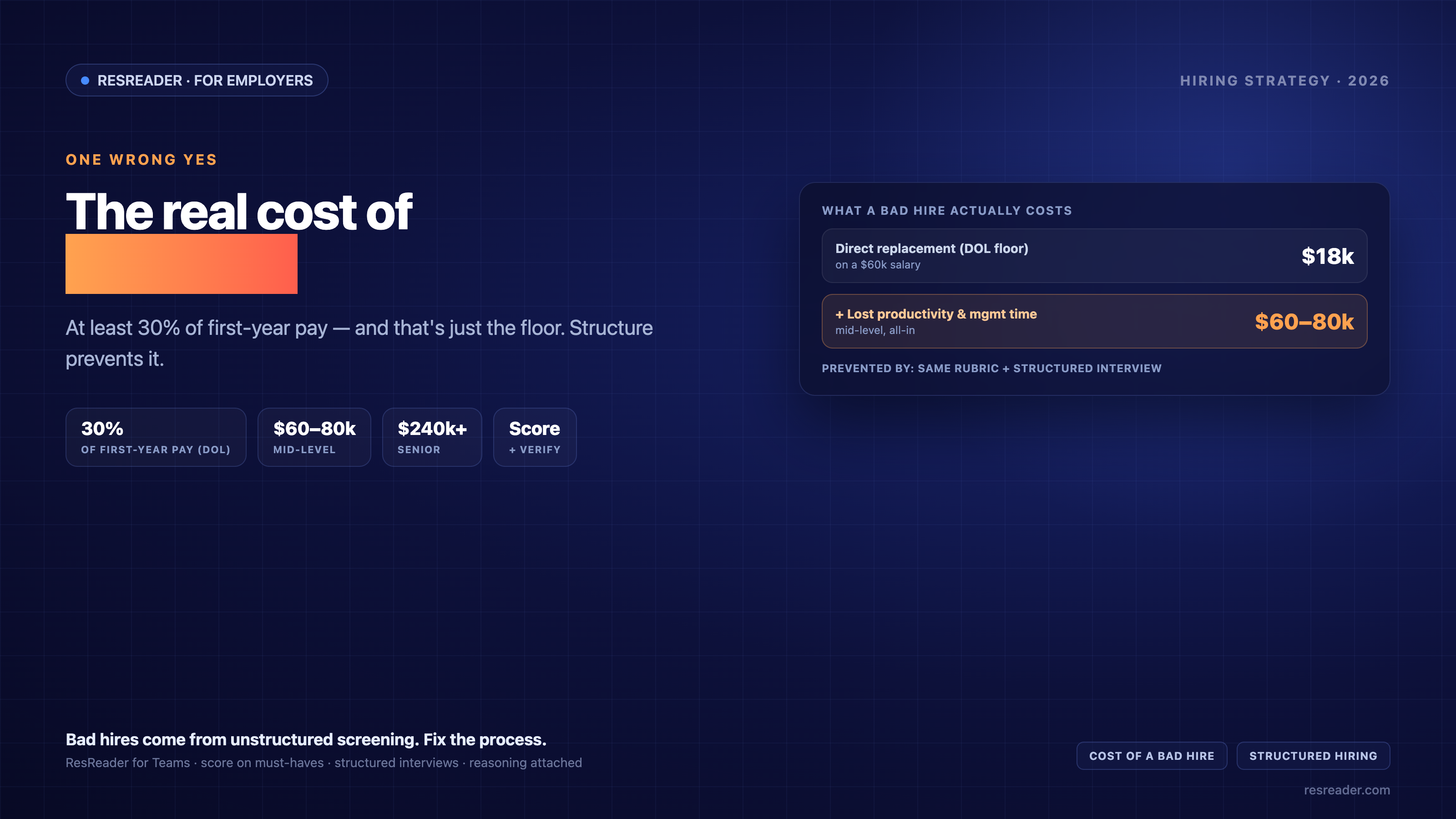
The Real Cost of a Bad Hire — And How to Stop Making Them (2026)
The U.S. Department of Labor puts a bad hire at 30% of first-year earnings — and that's the floor. A mid-level mis-hire runs $60k–80k. Here's where bad hires come from and how structured screening prevents them.
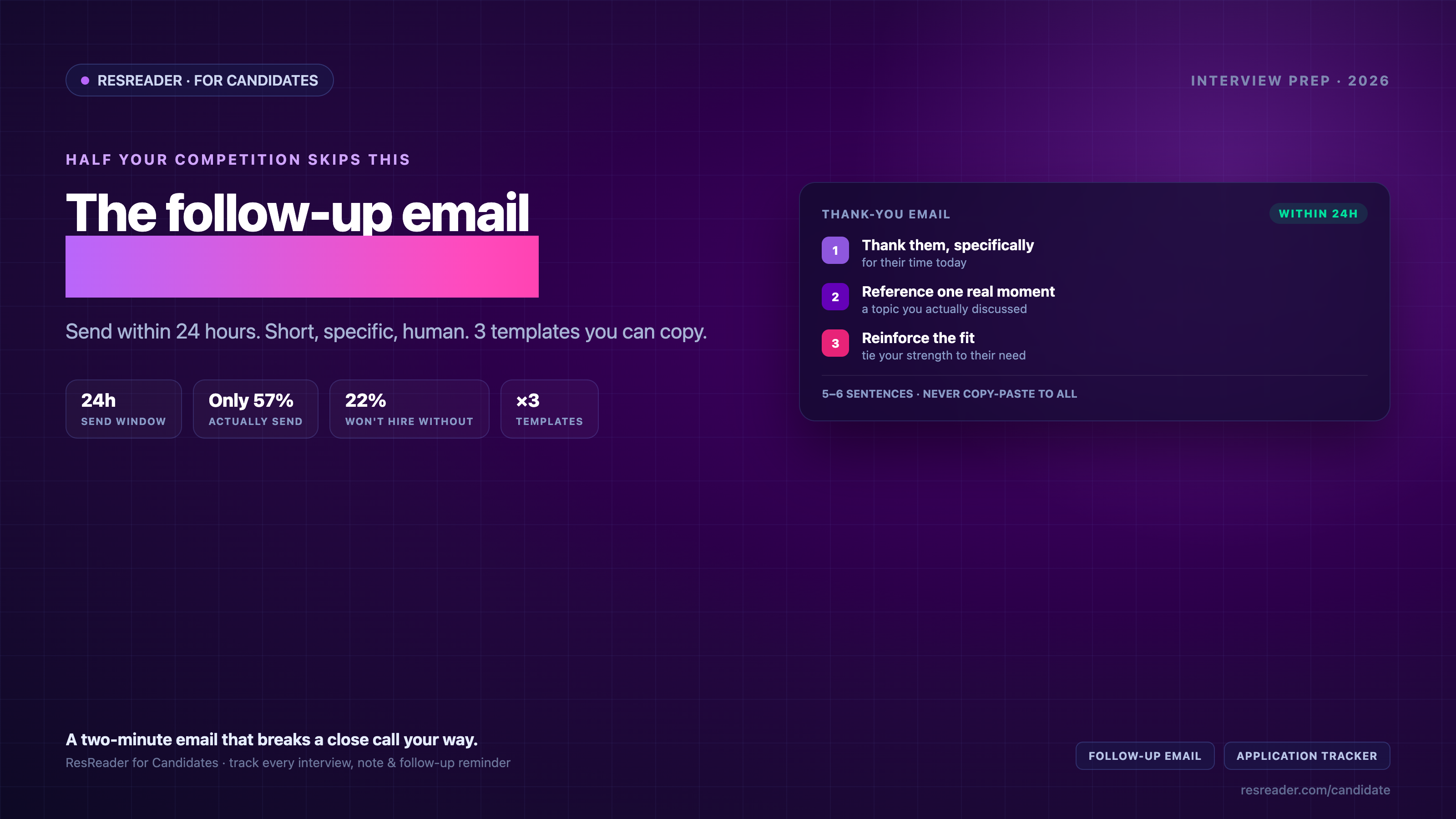
The Follow-Up Email After an Interview: Timing, Templates, and Why It Still Matters (2026)
Only 57% of candidates send a thank-you email after an interview — but 22% of employers are less likely to hire someone who doesn't. Here's when to send it, what to write, and three templates you can copy.
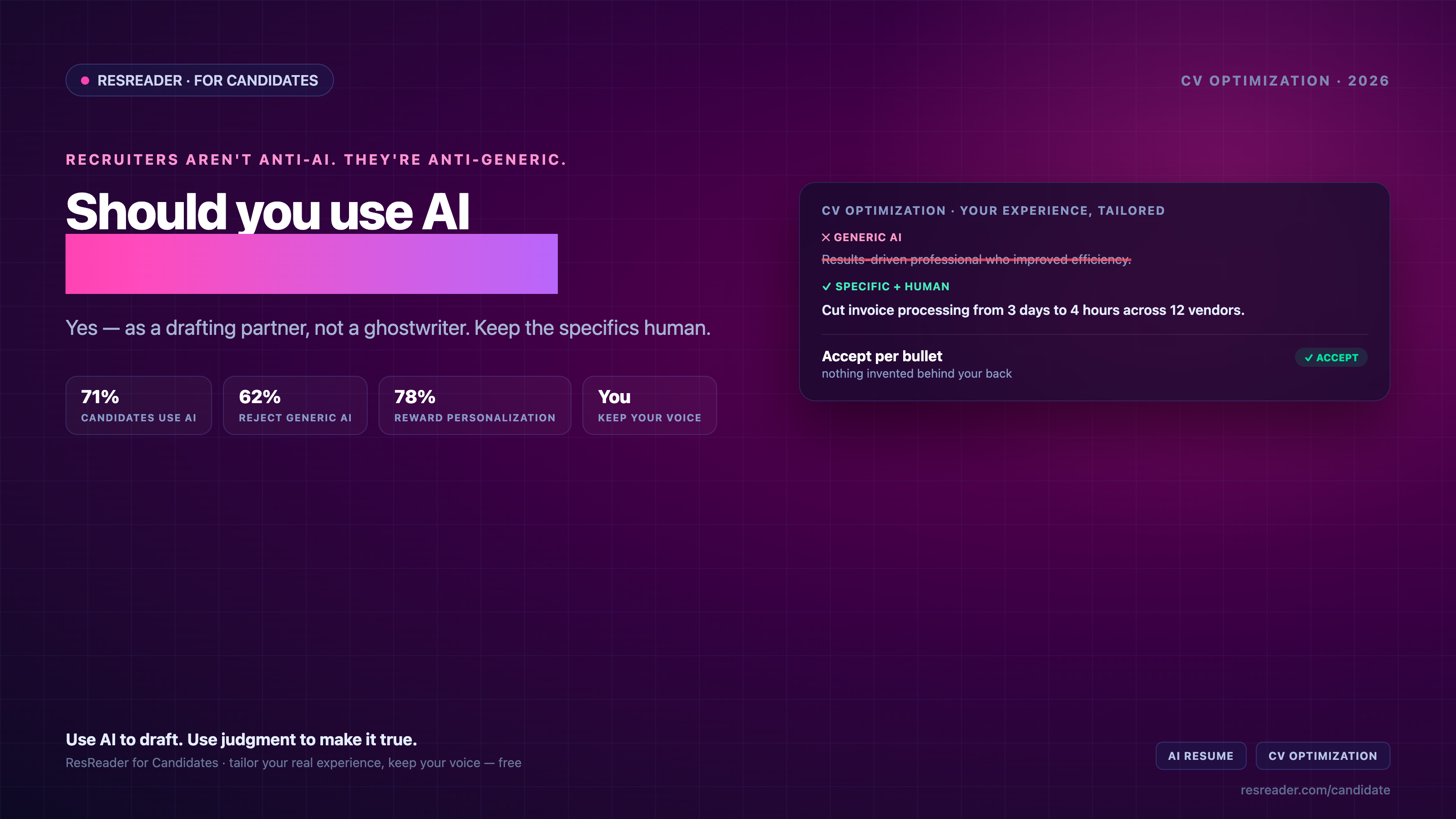
Should You Use AI to Write Your Resume? What Recruiters Actually Think (2026)
Recruiters don't care that you used AI — they care that your resume is generic. 62% reject AI resumes with no personalization. Here's how to use AI the right way and still sound like you.
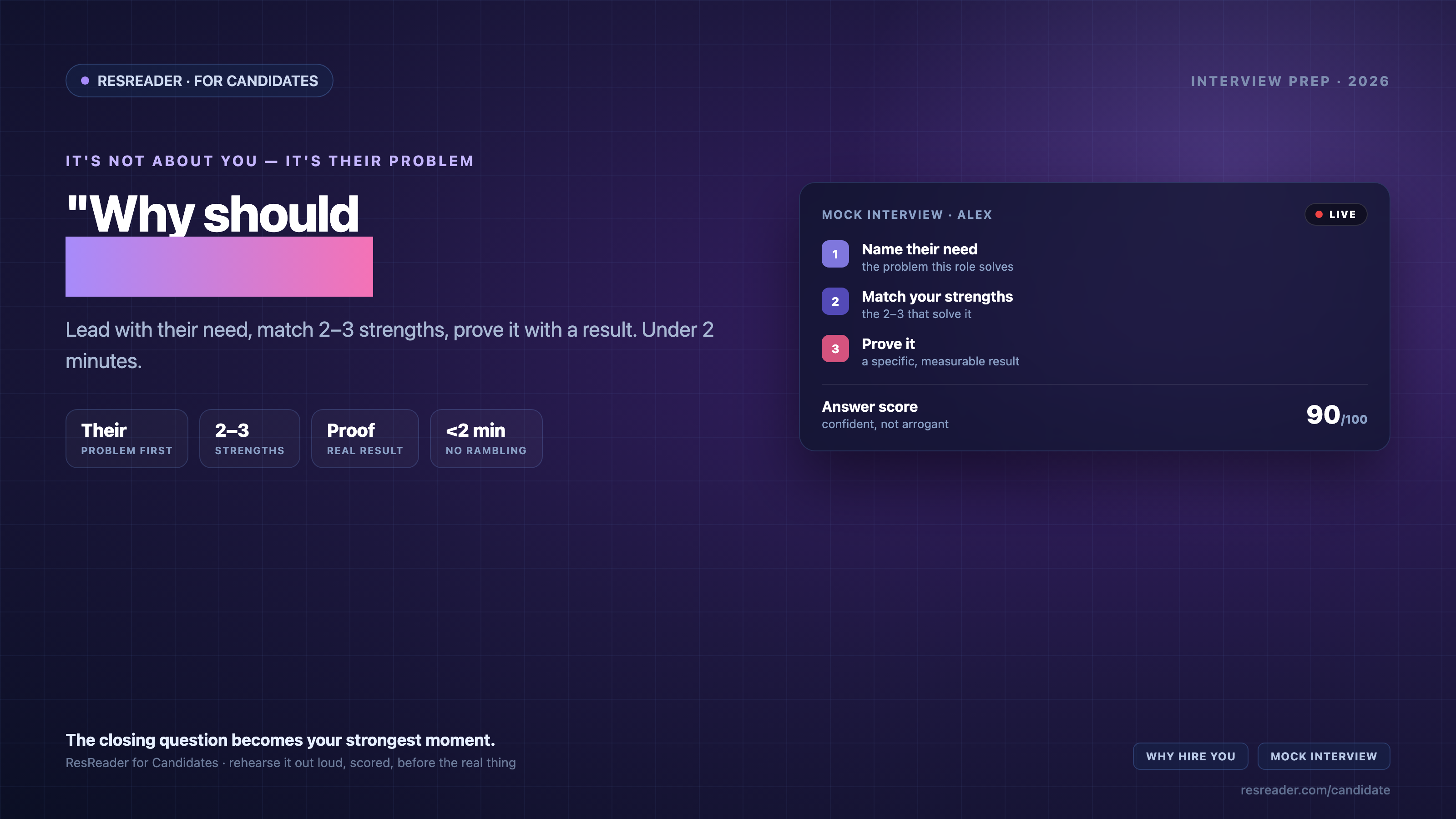
"Why Should We Hire You?" — How to Answer It Without Sounding Arrogant (2026)
"Why should we hire you?" isn't about you — it's about their problem. Here's a simple way to answer that leads with their needs, proves your fit with real results, and stays under two minutes.
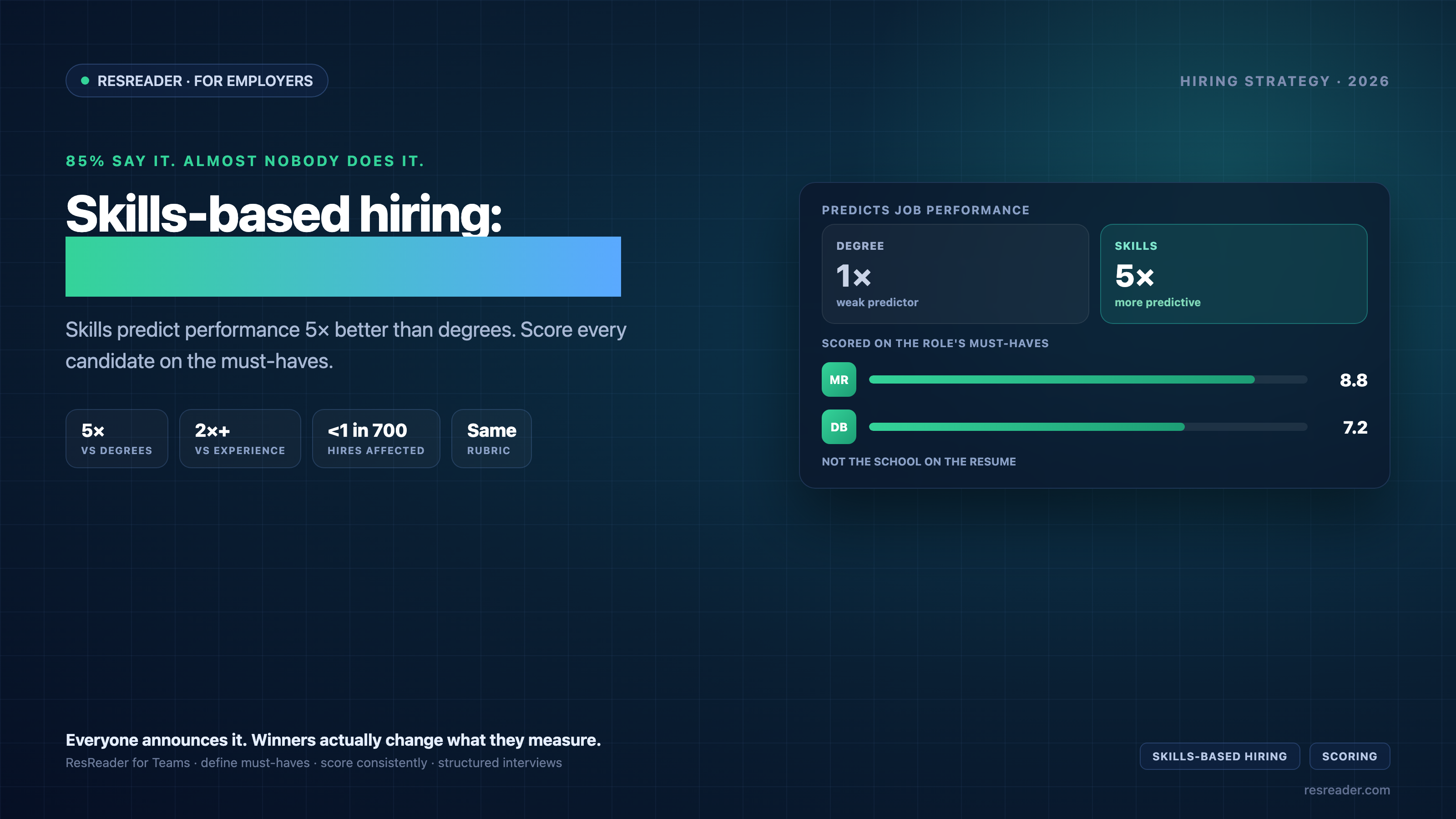
Skills-Based Hiring: Everyone Says They Do It. Here's How to Actually Screen for Skills (2026)
85% of employers claim skills-based hiring, but Harvard found fewer than 1 in 700 hires are actually affected. Skills are 5× more predictive of performance than degrees — here's how to close the gap in your own screening.
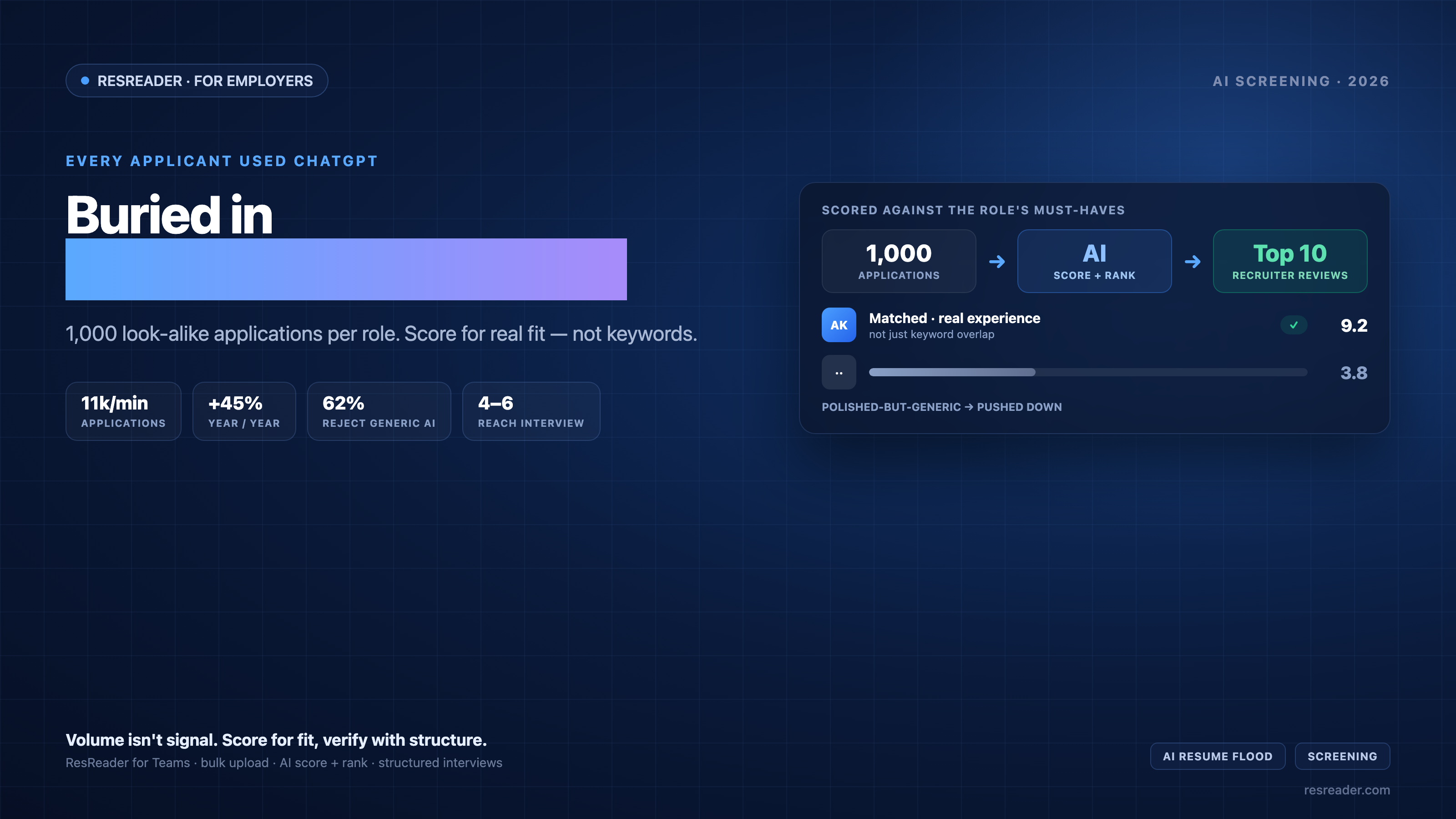
Buried in AI-Generated Resumes? How to Screen When Everyone Applied With ChatGPT (2026)
LinkedIn now sees 11,000 applications a minute, up 45% year over year — and most look identical. Here's why volume isn't signal, and how to screen for real fit when every resume is AI-polished.
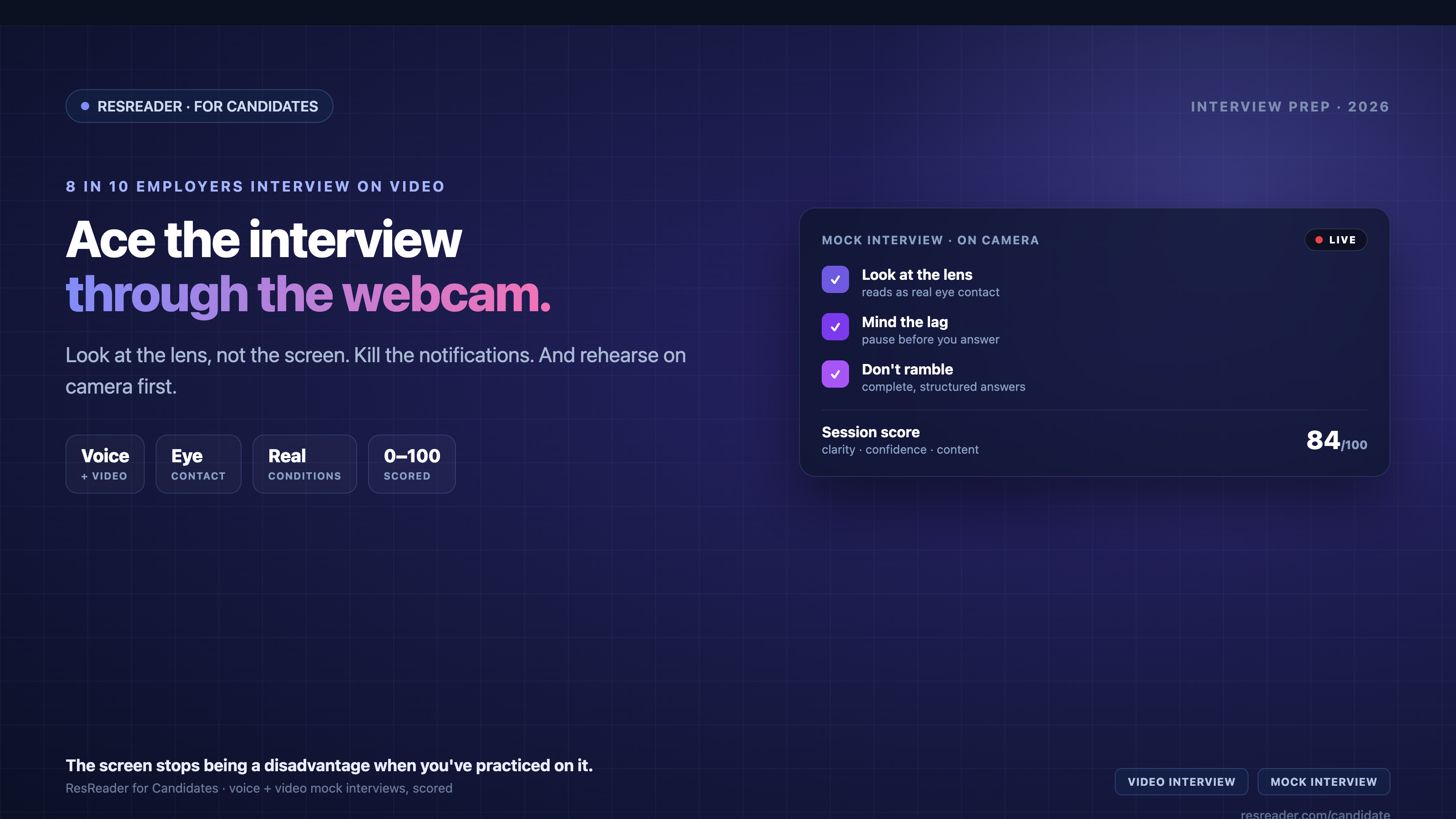
How to Ace a Video Interview in 2026 (When 8 in 10 Employers Use Them)
Around 80% of employers now interview over video — and most candidates prepare less for them, not more. Here's how to nail the tech, the setup, and the delivery, plus how to rehearse on camera before it counts.
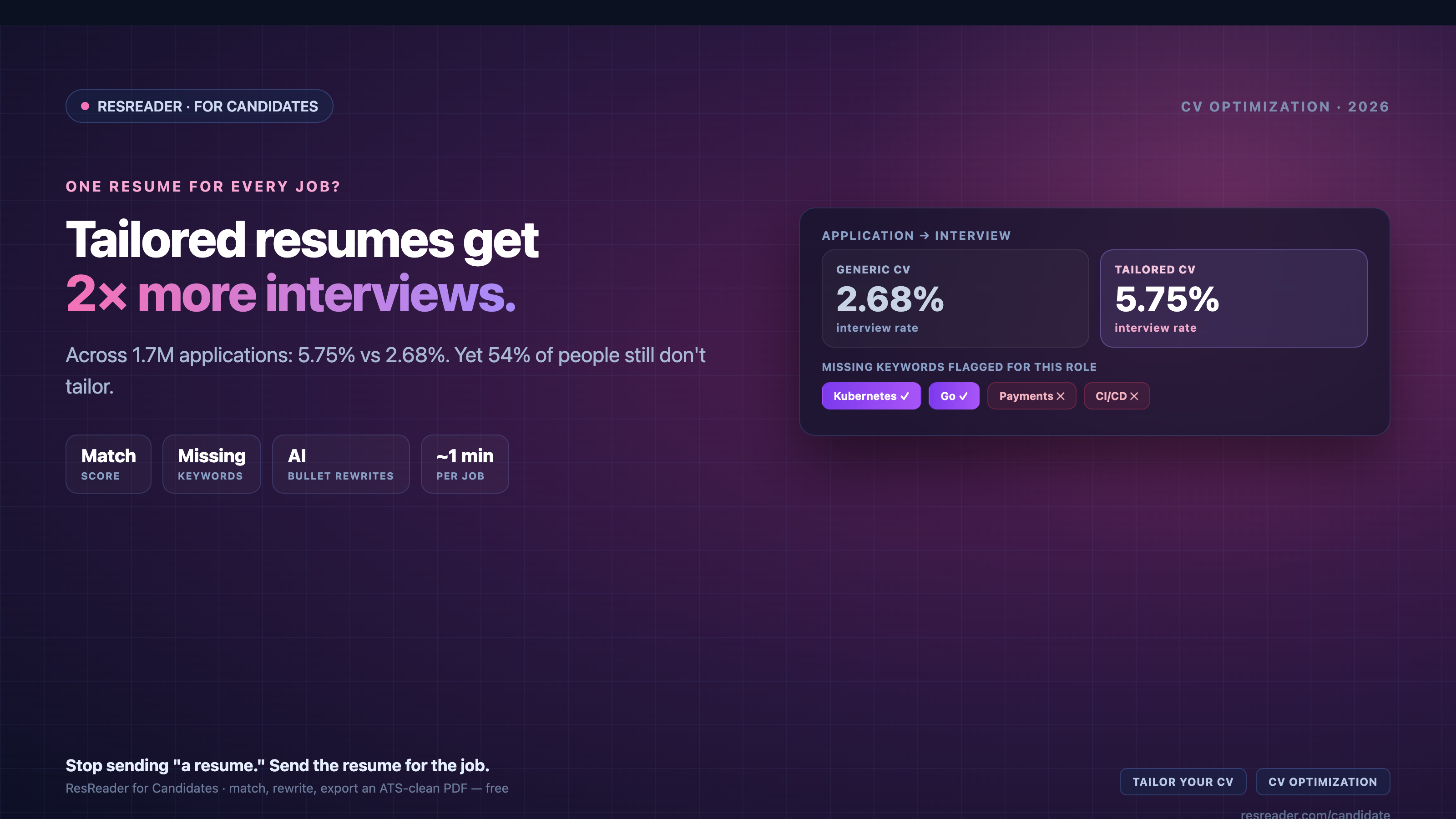
Why One Resume for Every Job Is Costing You Interviews (2026 Data)
Across 1.7M applications, tailored resumes got interviews at more than double the rate of generic ones — yet 54% of candidates still send the same CV everywhere. Here's how to tailor fast, with examples.
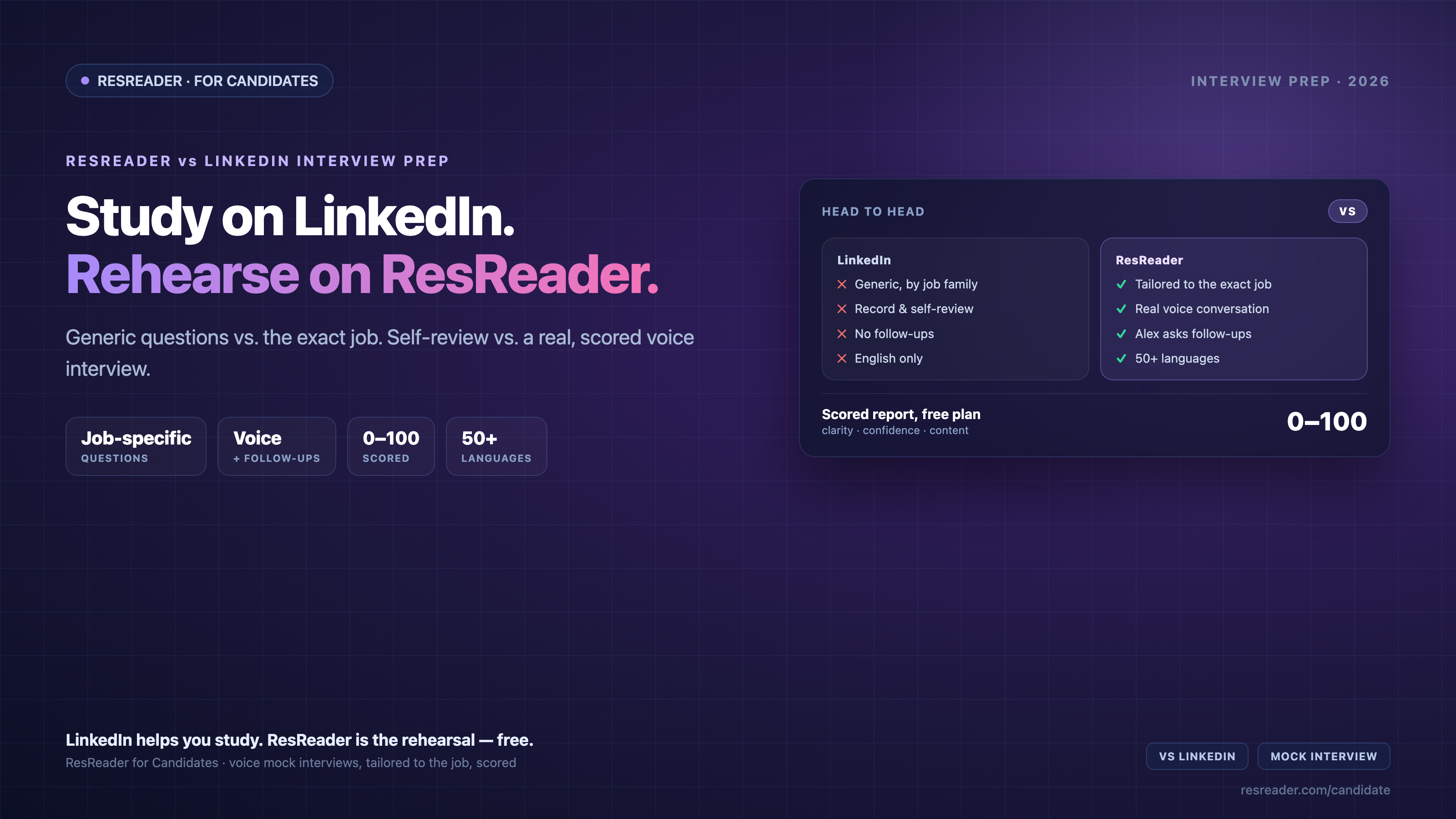
ResReader vs. LinkedIn Interview Prep: Which Actually Gets You Interview-Ready? (2026)
LinkedIn Interview Prep and ResReader both help you practice — but in very different ways. A head-to-head on questions, format, feedback, languages, and price, so you can pick the right one before your next interview.
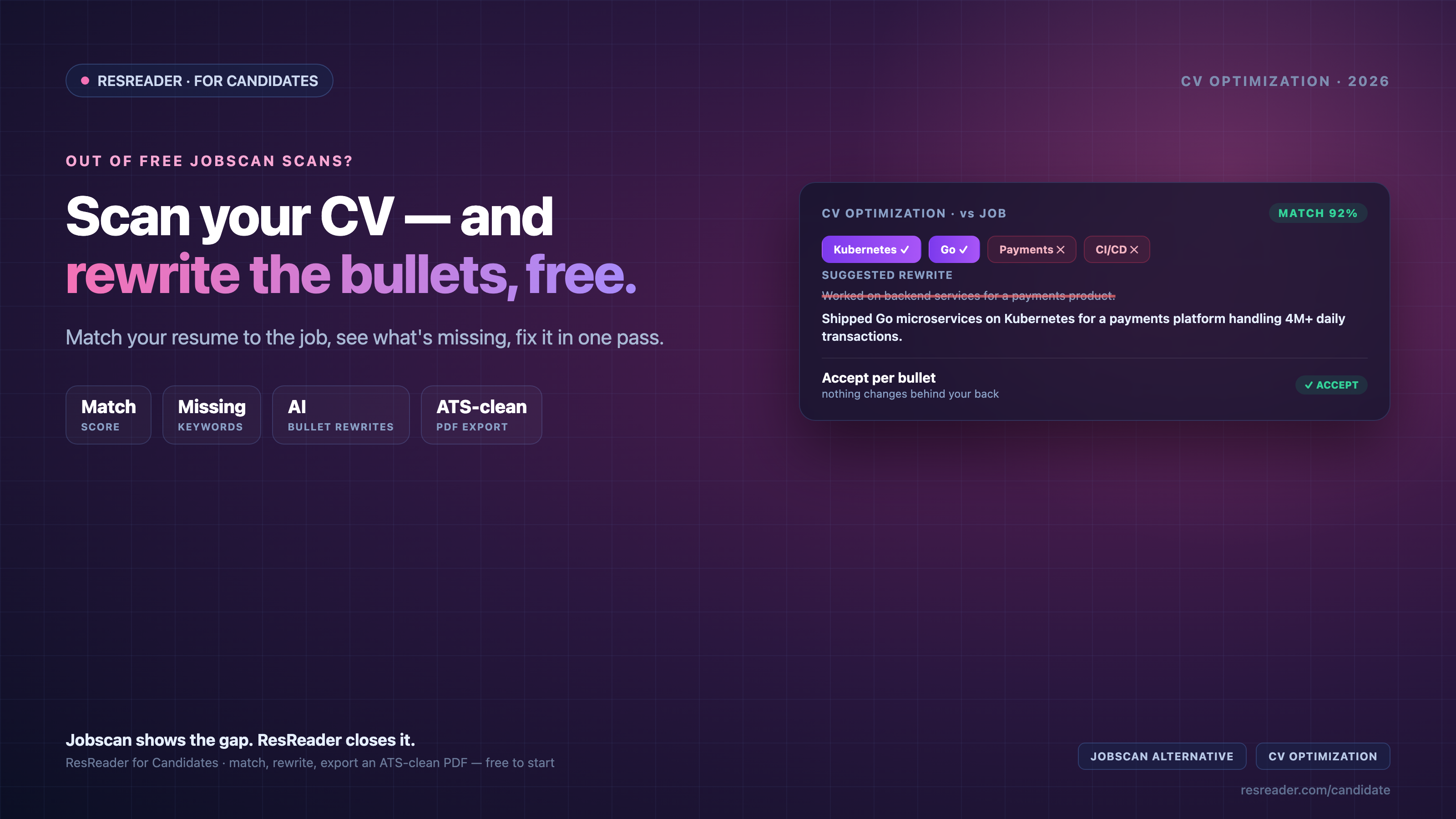
Out of Free Jobscan Scans? Here's a Free ATS Resume Tool That Also Rewrites Your CV
Jobscan's free plan gives you only 5 scans a month, then $49.95 for more. Here's a free alternative that scores your resume against a specific job, shows what's missing, and rewrites your bullets for you.
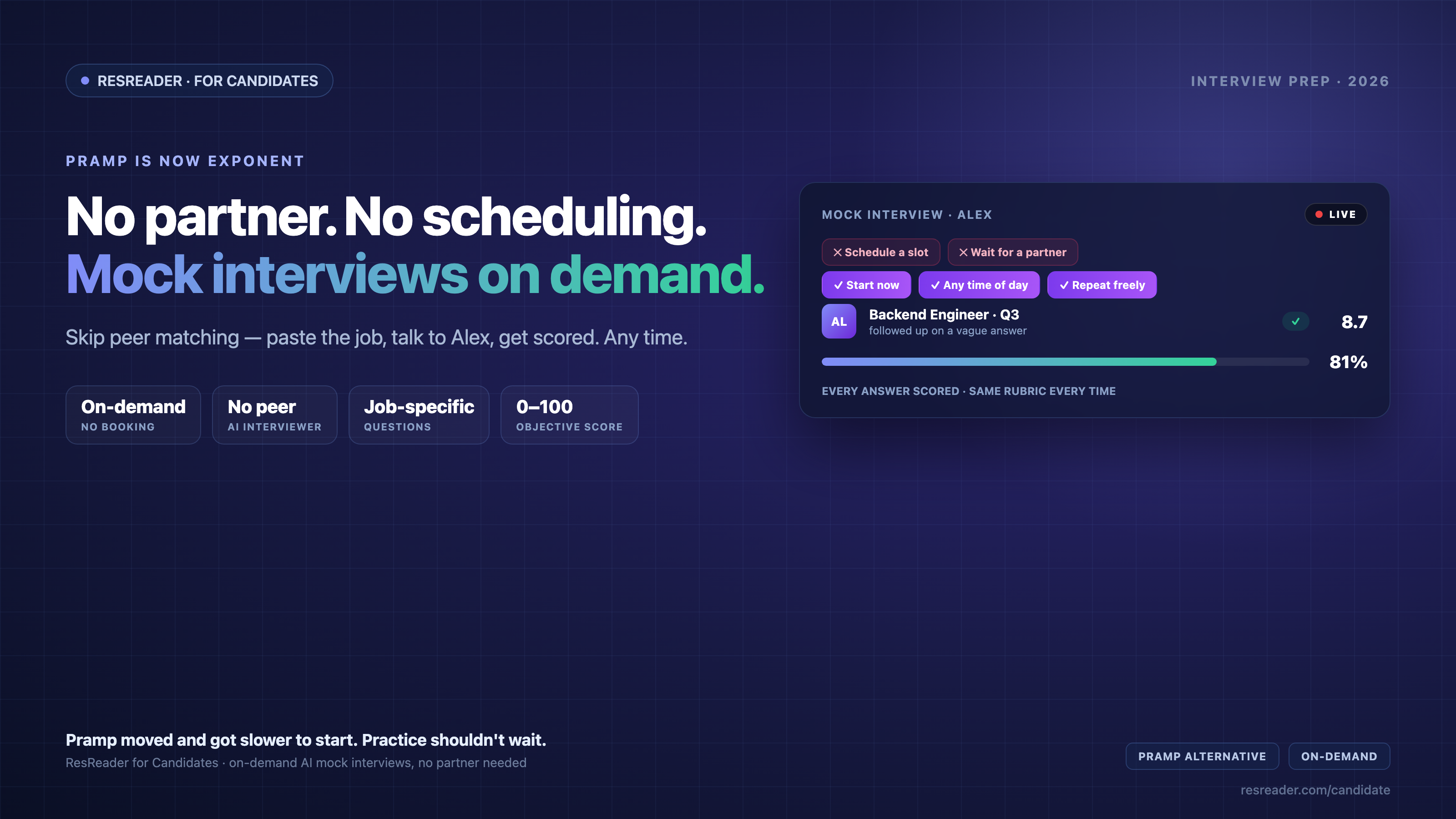
Pramp Is Now Exponent — Here's a Free On-Demand AI Alternative in 2026
Pramp moved to Exponent and free mock interviews now mean scheduling with a peer. If you'd rather practice on demand, here's a free voice-based AI alternative with job-specific questions and scored feedback.
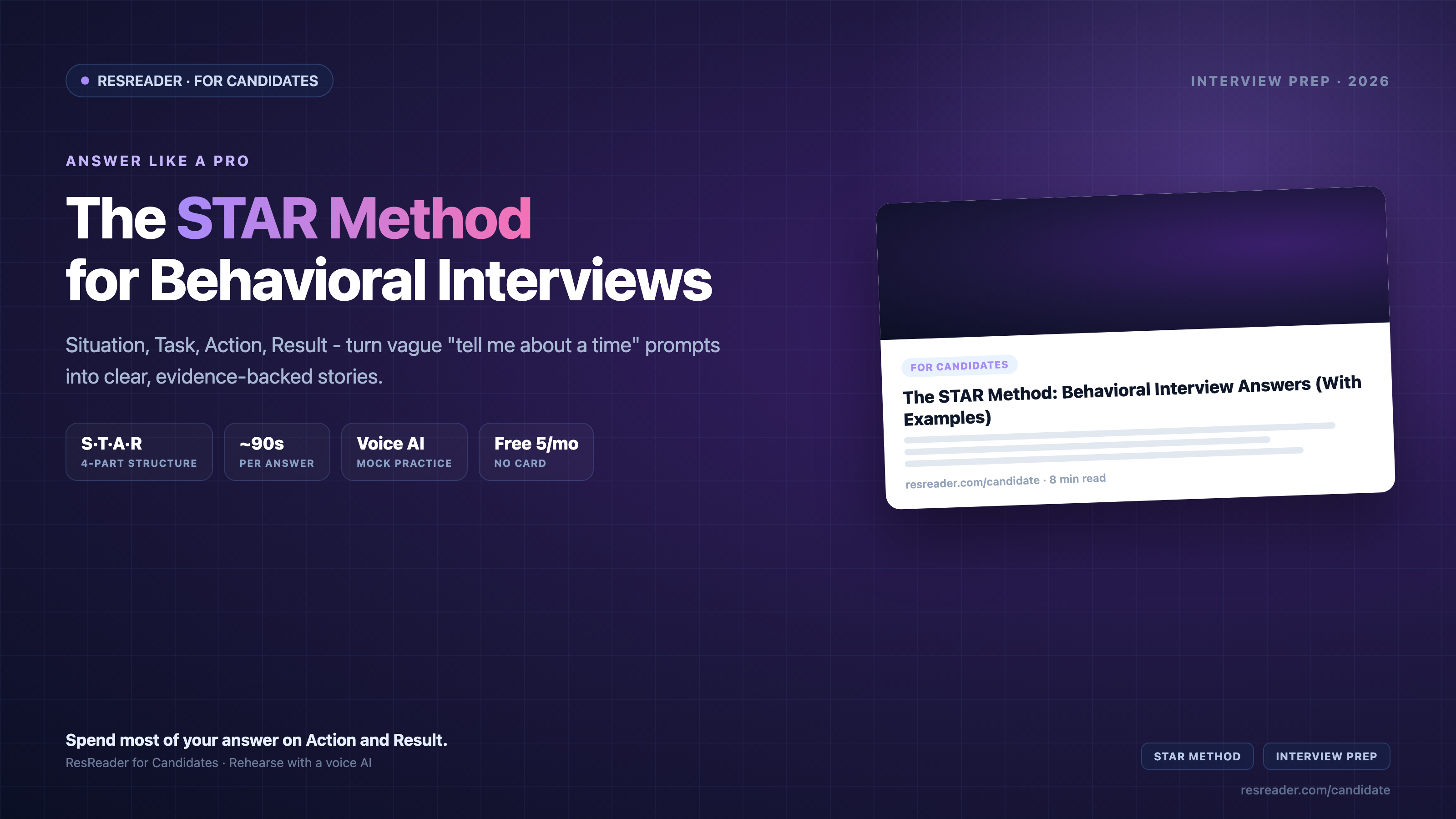
The STAR Method: How to Answer Behavioral Interview Questions (With Examples)
Master the STAR method for behavioral interviews - Situation, Task, Action, Result - with full example answers, common mistakes, and rehearsal tips.
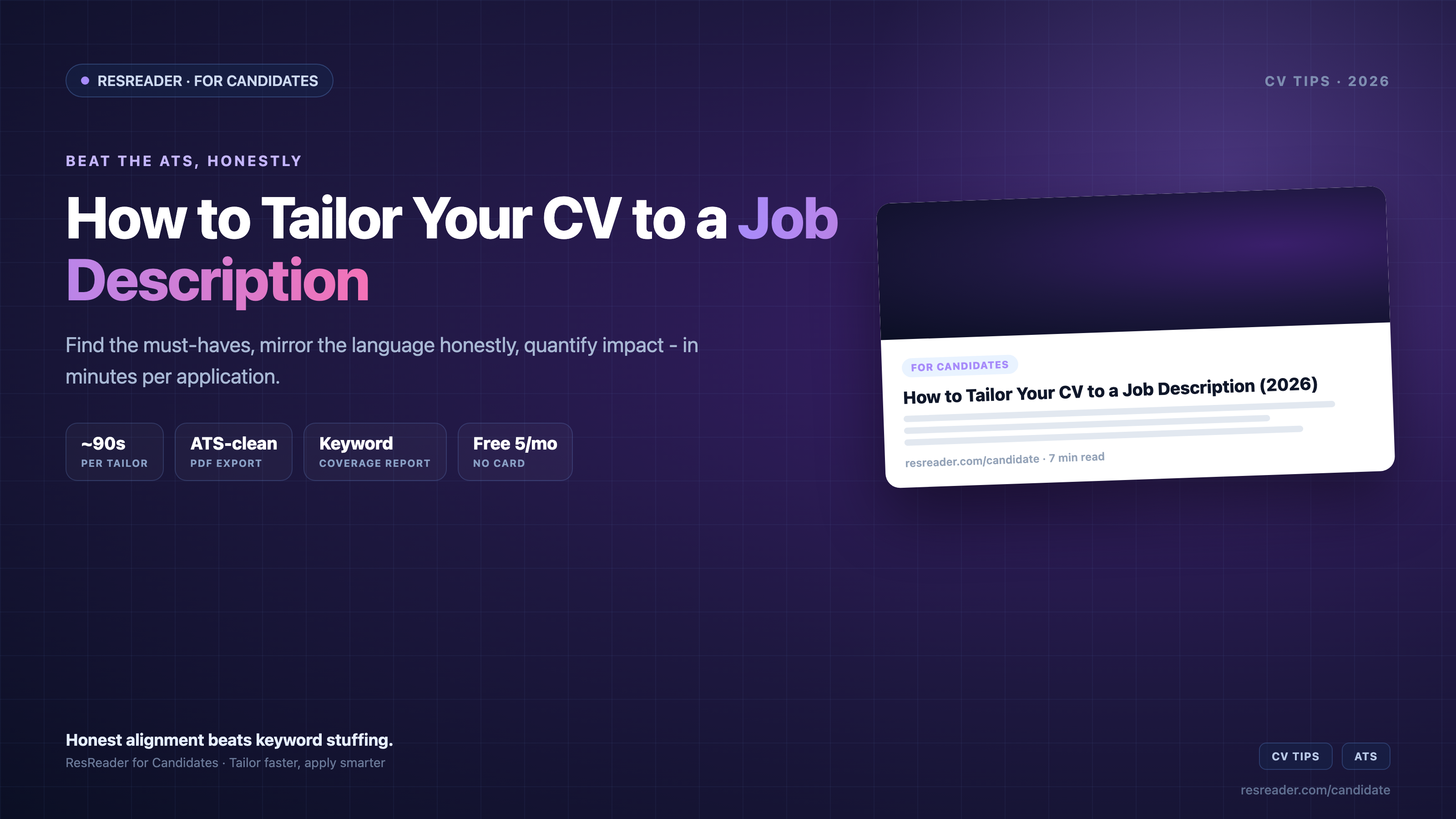
How to Tailor Your CV to a Job Description (2026)
Learn how to tailor your CV to any job description in 2026 - read the must-haves, mirror language honestly, quantify impact, and do it fast.
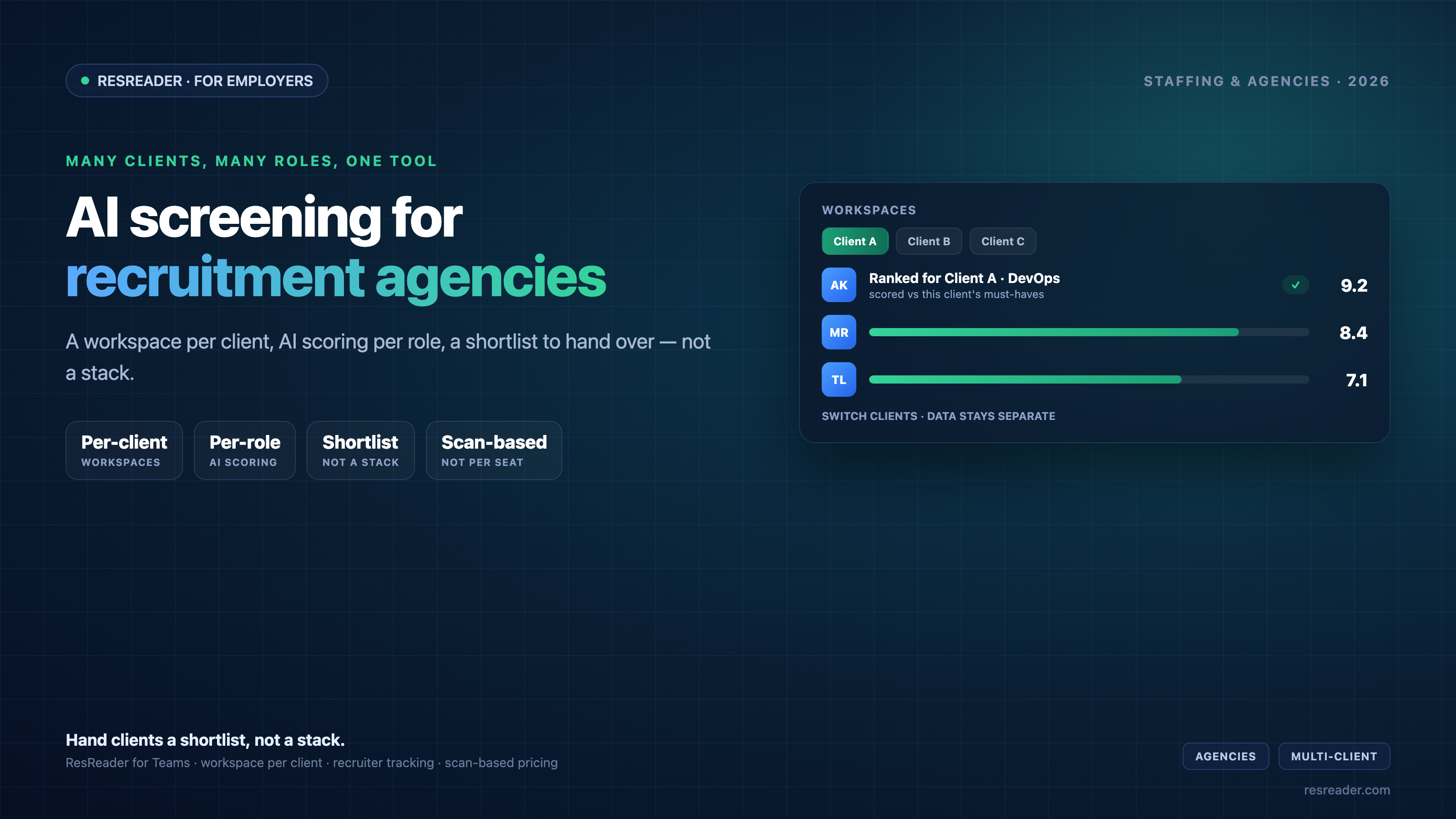
AI Screening for Recruitment Agencies: One Tool, Many Clients
Agencies juggle many clients, many roles, and many recruiters at once. Here's how to run AI résumé screening and first-round interviews across separate client workspaces — with per-recruiter tracking — in one tool.
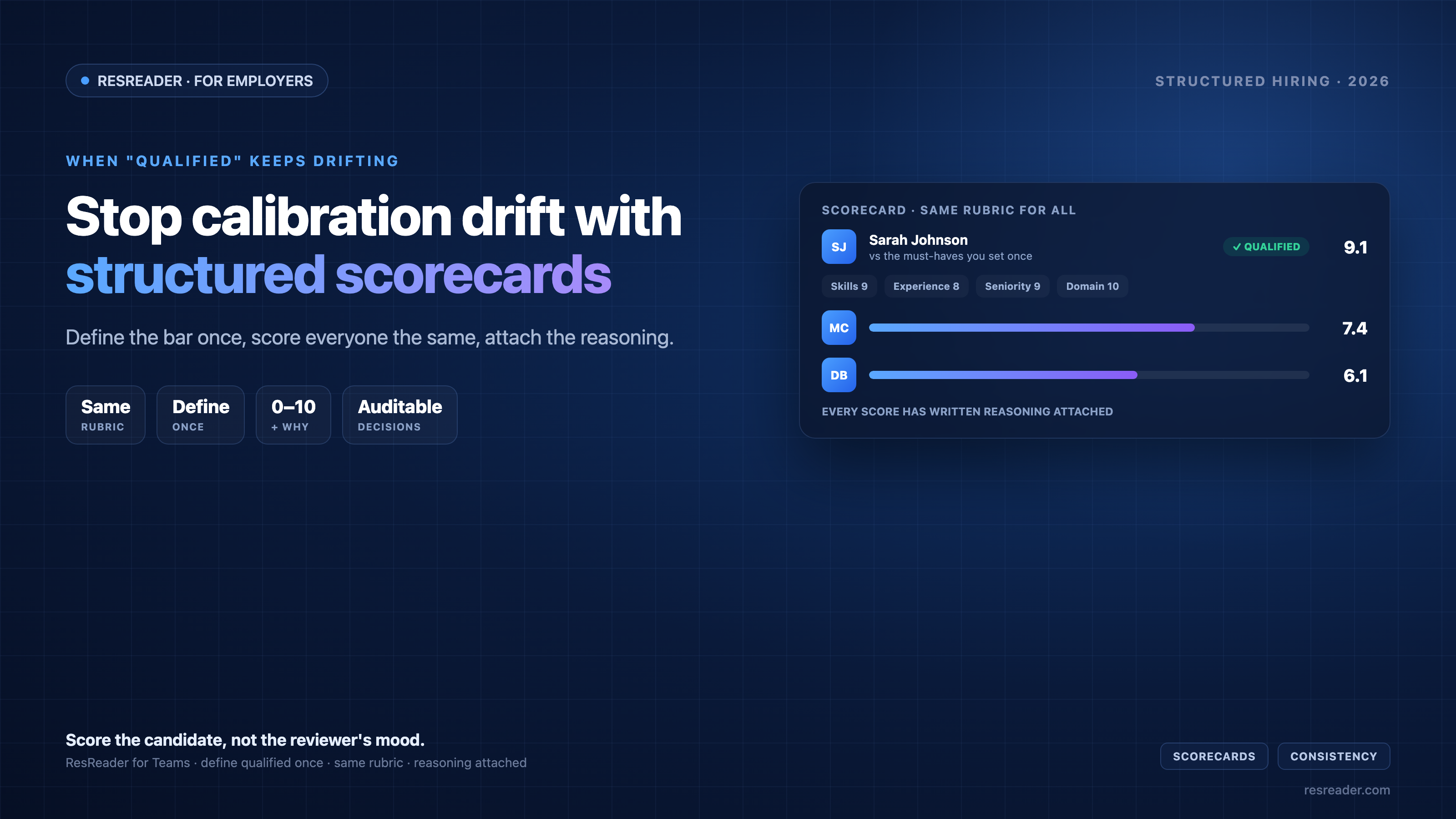
Stop Calibration Drift: Structured Scorecards for Consistent Hiring
When "qualified" means something different to every reviewer, good candidates get rejected and bad ones advance. Here's how structured scorecards and a defined bar keep hiring decisions consistent — at any volume.
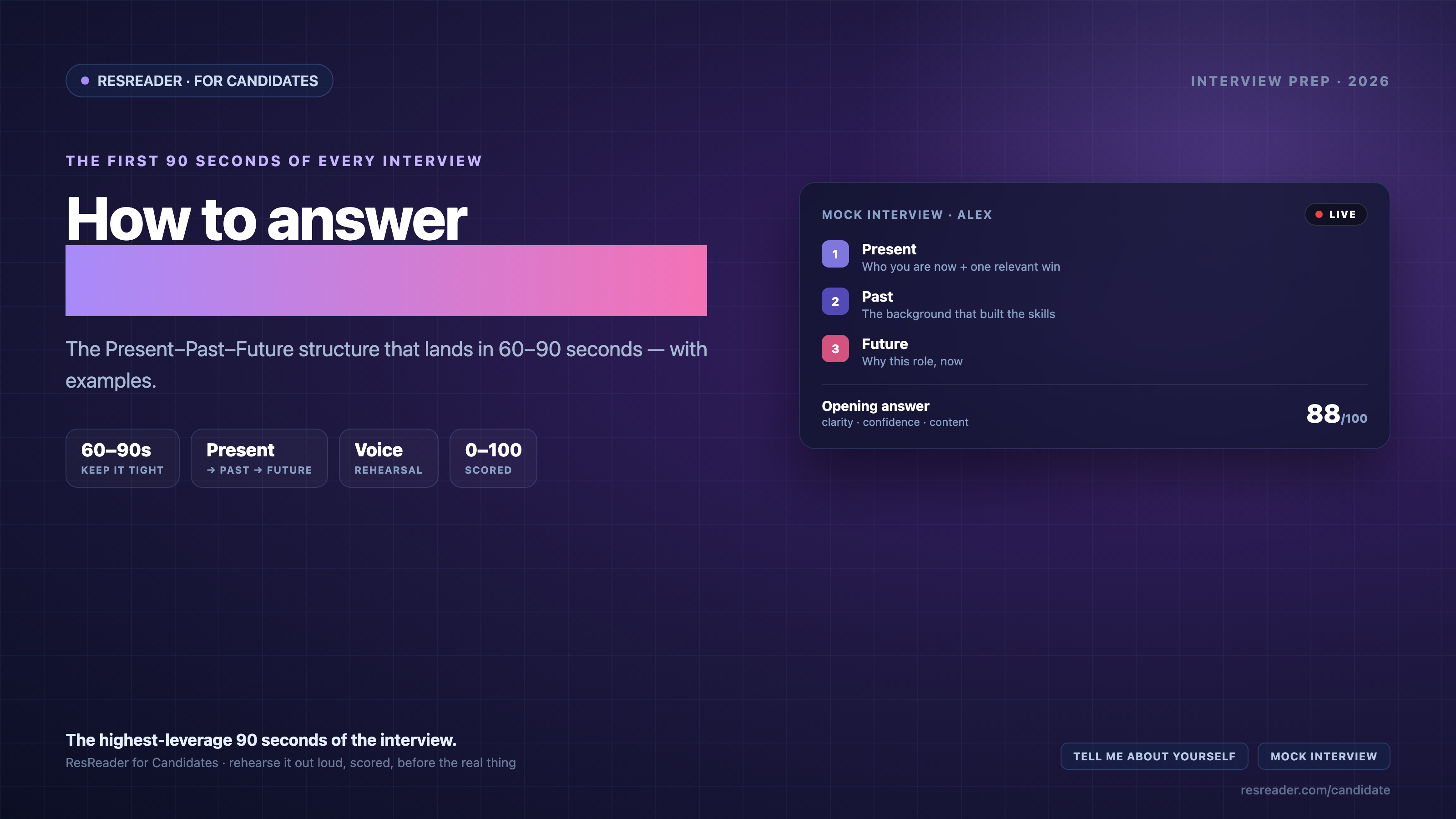
How to Answer "Tell Me About Yourself" in 2026 (With Examples)
"Tell me about yourself" is the first question in almost every interview — and the easiest to fumble. Here's the Present–Past–Future structure, real examples, the mistakes to avoid, and how to rehearse it out loud.
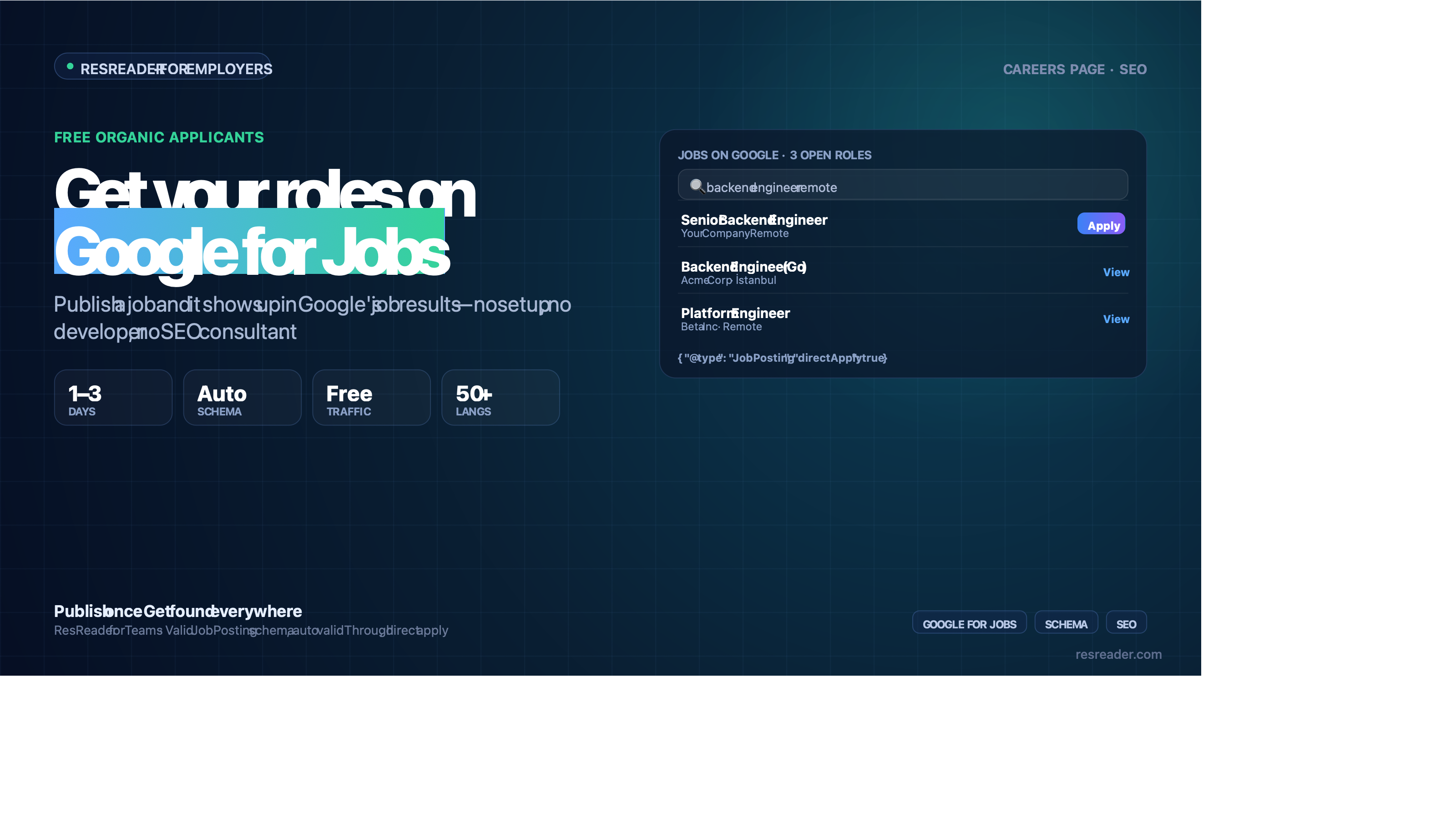
How to Get Your Jobs on Google for Jobs — Free and Automatic
Google for Jobs is free, but only indexes pages with valid JobPosting structured data. Here's how it works in 2026 — and how ResReader emits the schema automatically so your roles show up without an SEO team.
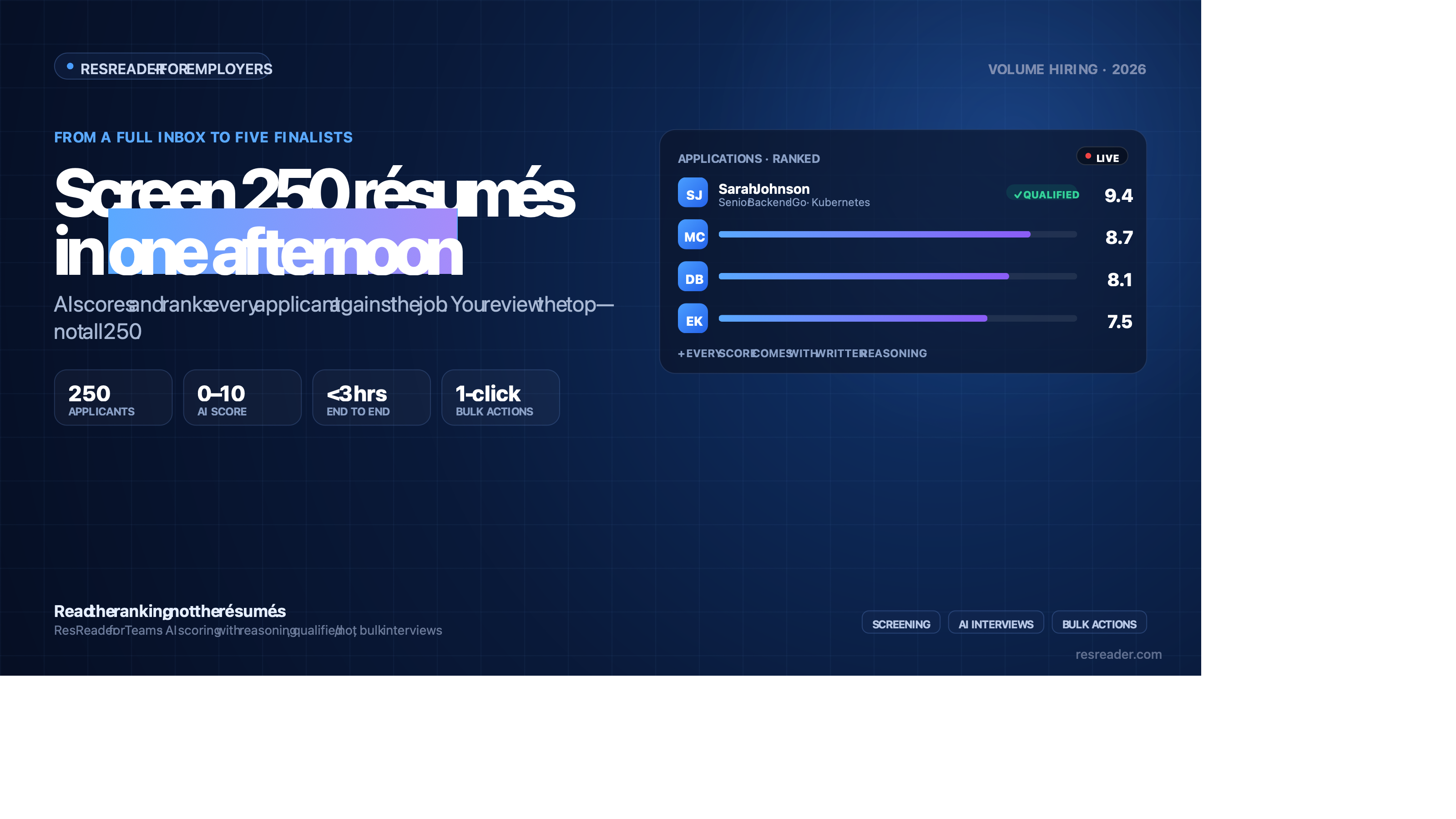
How to Screen 250 Applications in One Afternoon (A 2026 Playbook)
A role pulls 250 applicants and nobody has time to read them. Here's an hour-by-hour playbook to go from a full inbox to five interview-ready finalists in a single afternoon — without skimming past good people.
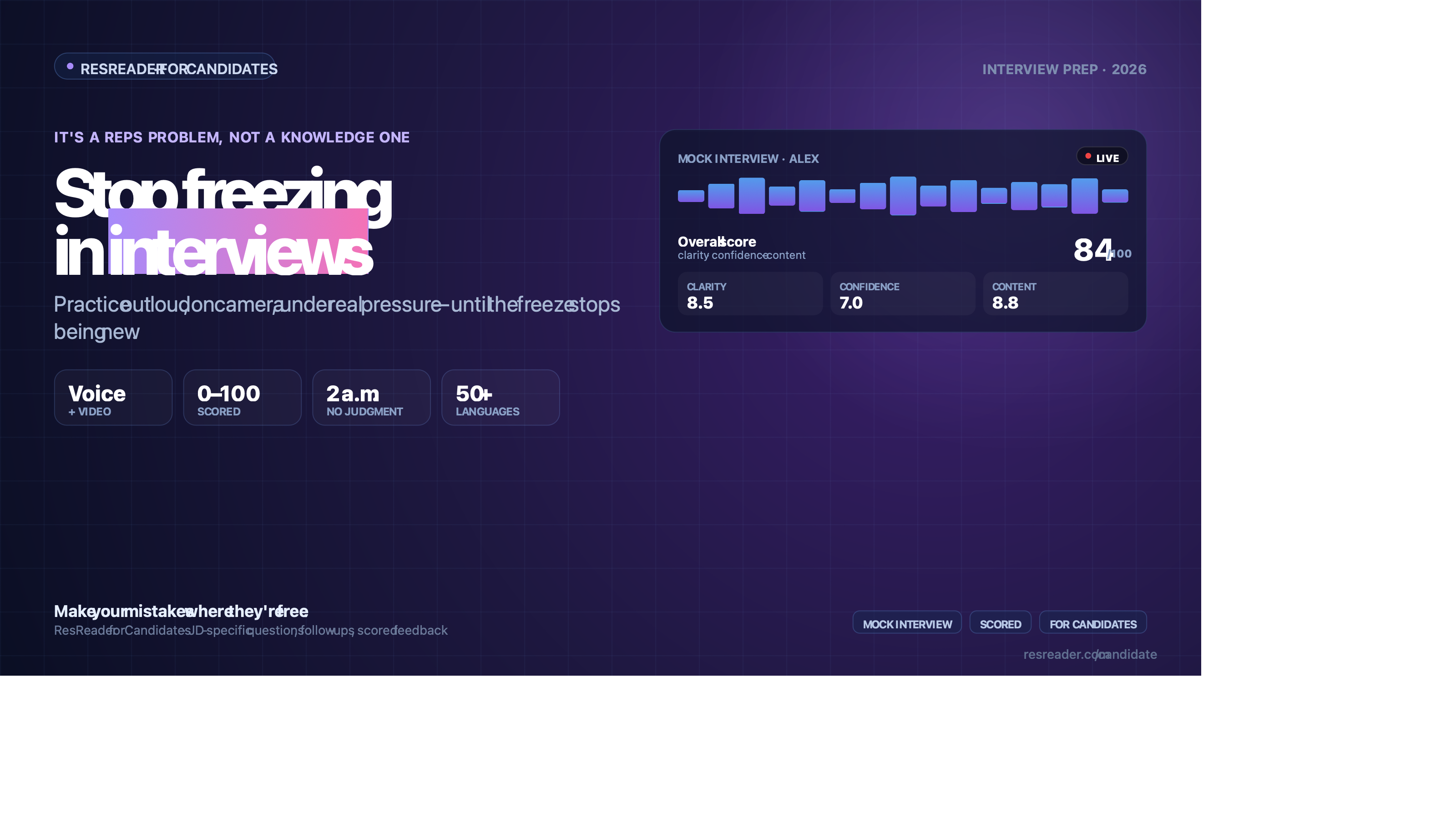
Why You Freeze in Interviews — and How to Stop (2026)
Going blank in interviews isn't a knowledge problem — it's a reps problem. Here's why your brain freezes under pressure and how low-stakes practice with realistic conditions makes it stop.
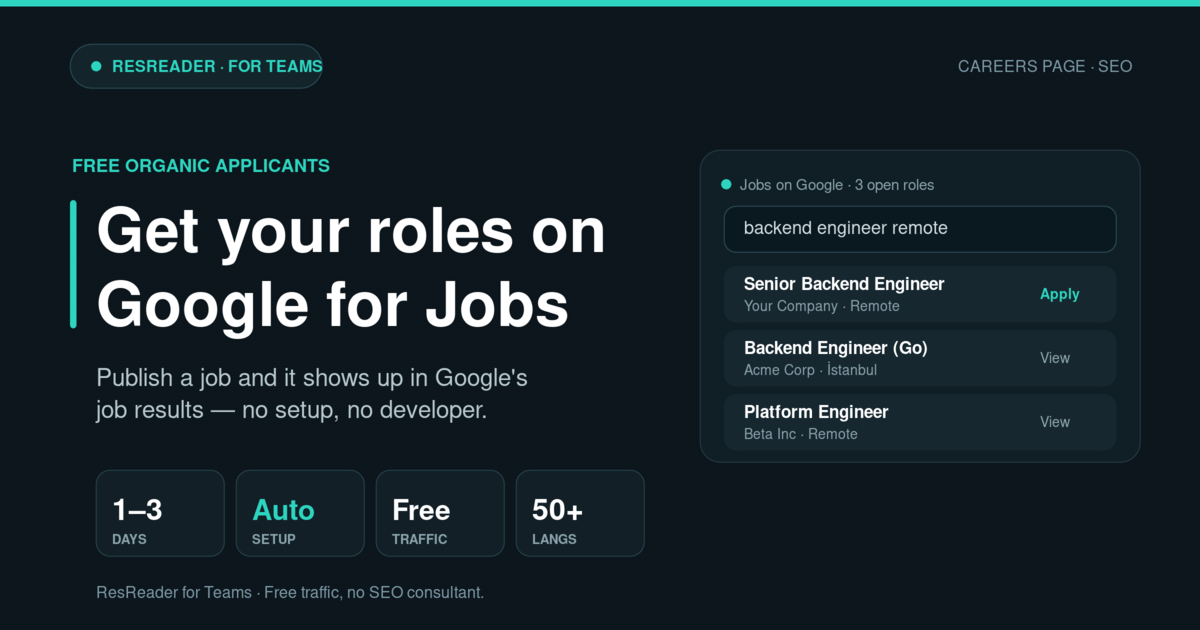
How to Get Your Open Roles on Google for Jobs (Without Any Technical Setup)
Google for Jobs sends free, high-intent applicants to companies whose roles are listed the right way. Here's how ResReader puts every role you publish in front of those candidates — automatically.
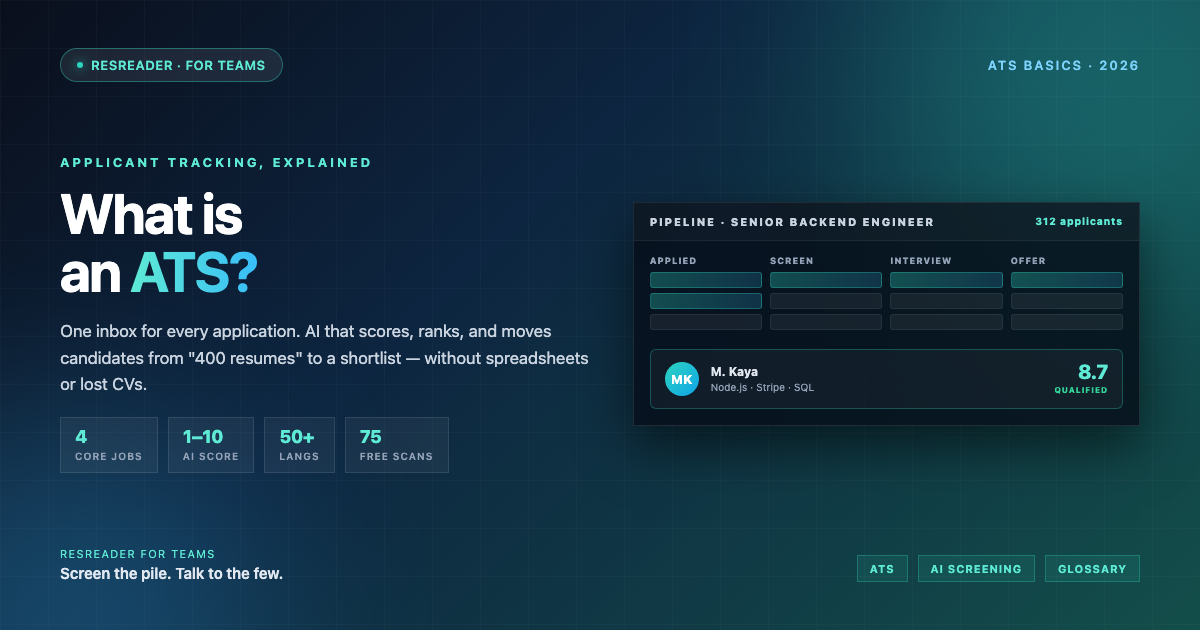
What Is an ATS? Applicant Tracking Systems Explained for 2026
An ATS collects, screens, and organizes every job application in one place. Here's what an applicant tracking system actually does, who needs one, and how AI changed it in 2026.
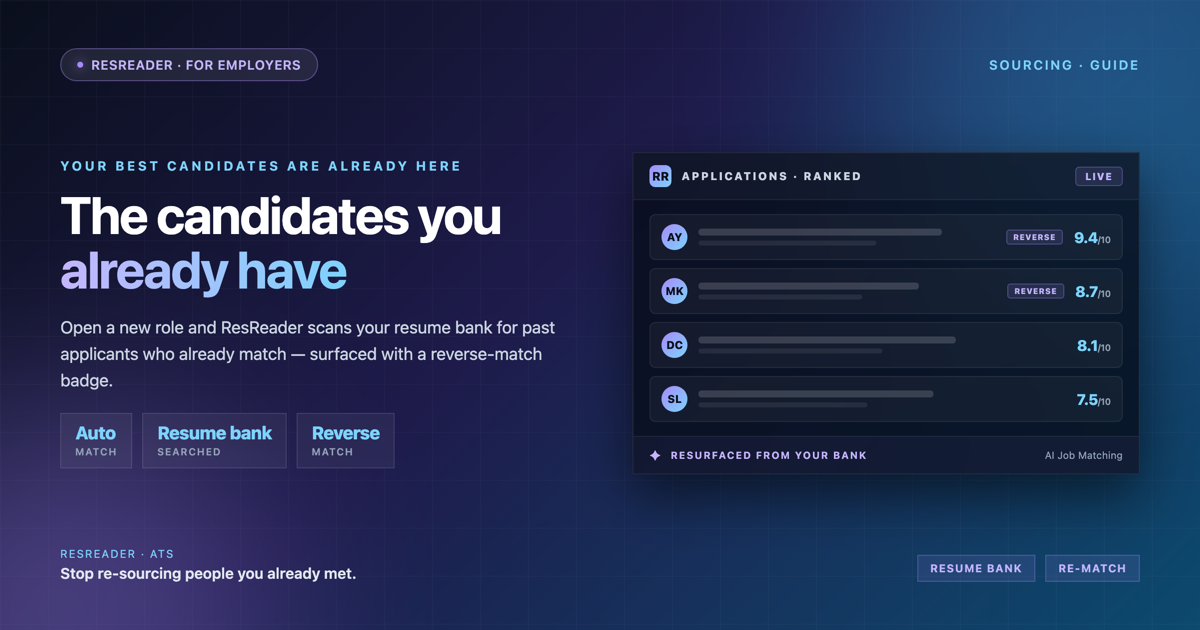
Talent Rediscovery: The Candidates You Already Have | ResReader
Talent rediscovery turns past applicants into your fastest source of hire. Learn how to surface and re-engage silver-medalist candidates with ResReader.
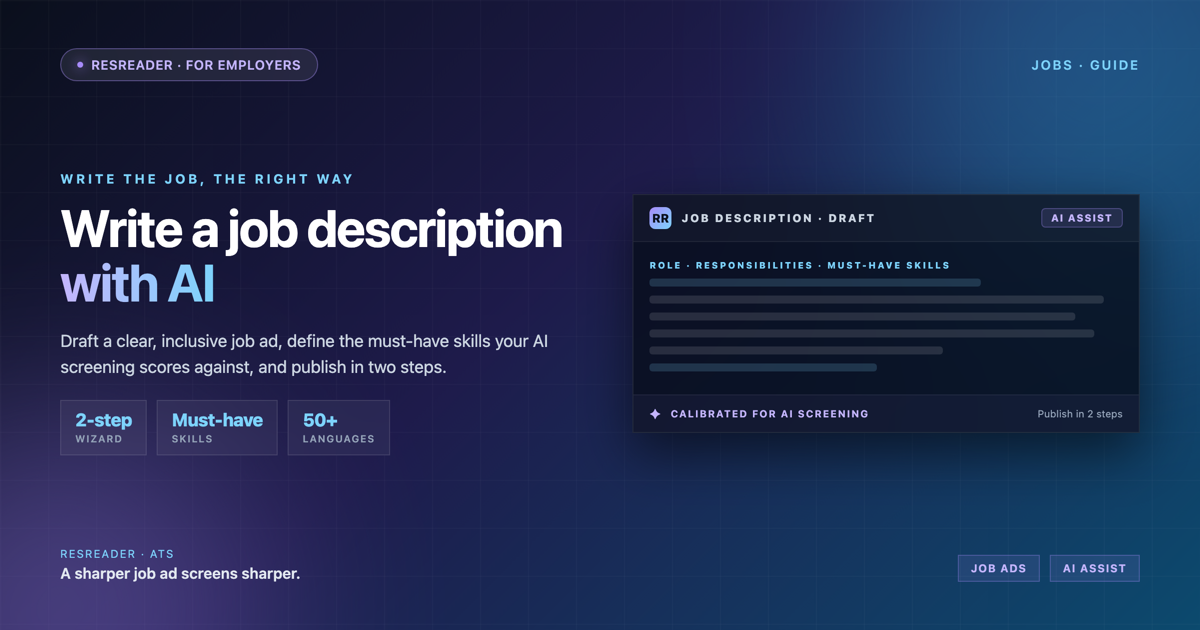
How to Write a Job Description With AI
Learn how to write a job description that attracts the right candidates and powers accurate AI screening. A step-by-step guide with a JD template.
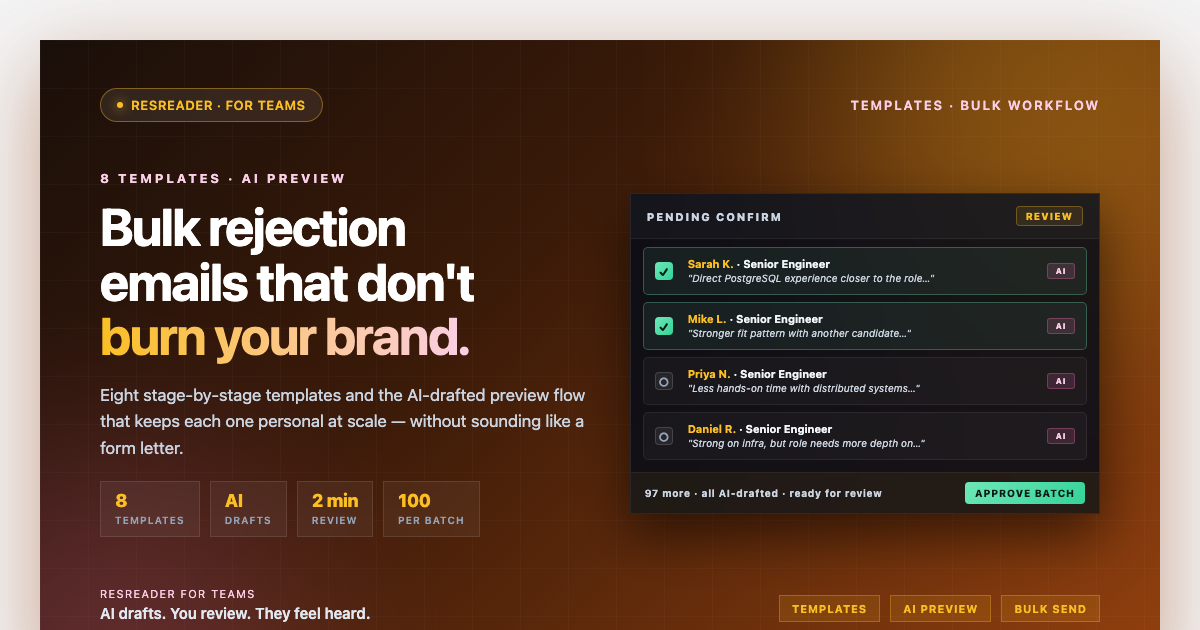
Bulk Rejection Email Templates That Don't Burn Your Employer Brand
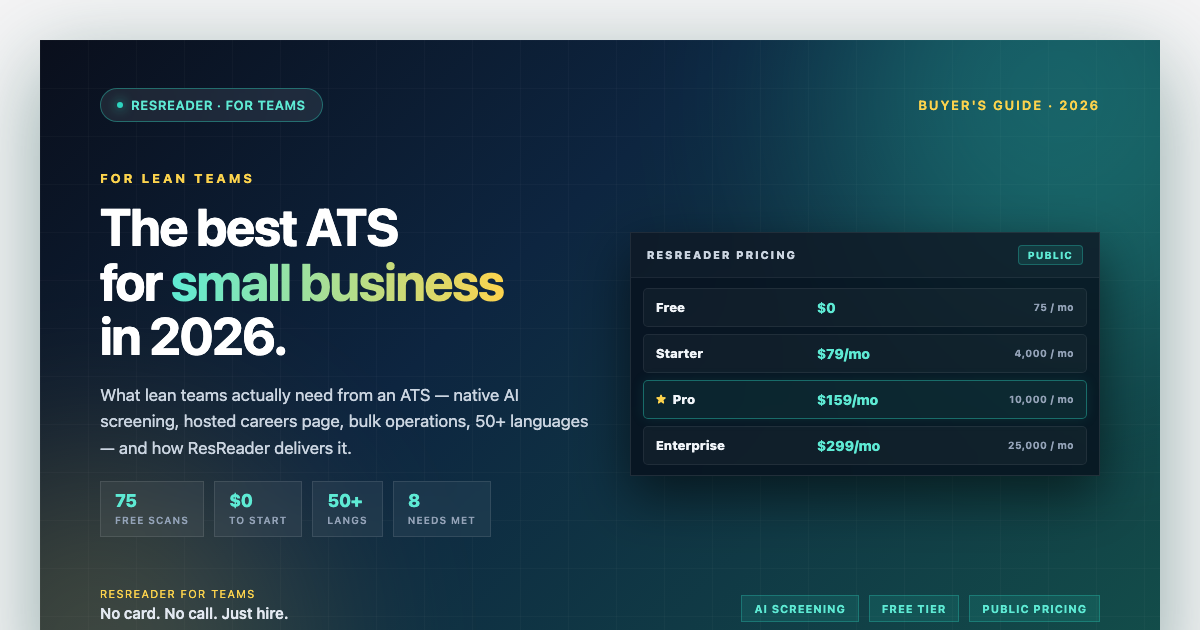
The Best ATS for Small Business in 2026 — What Lean Teams Actually Need
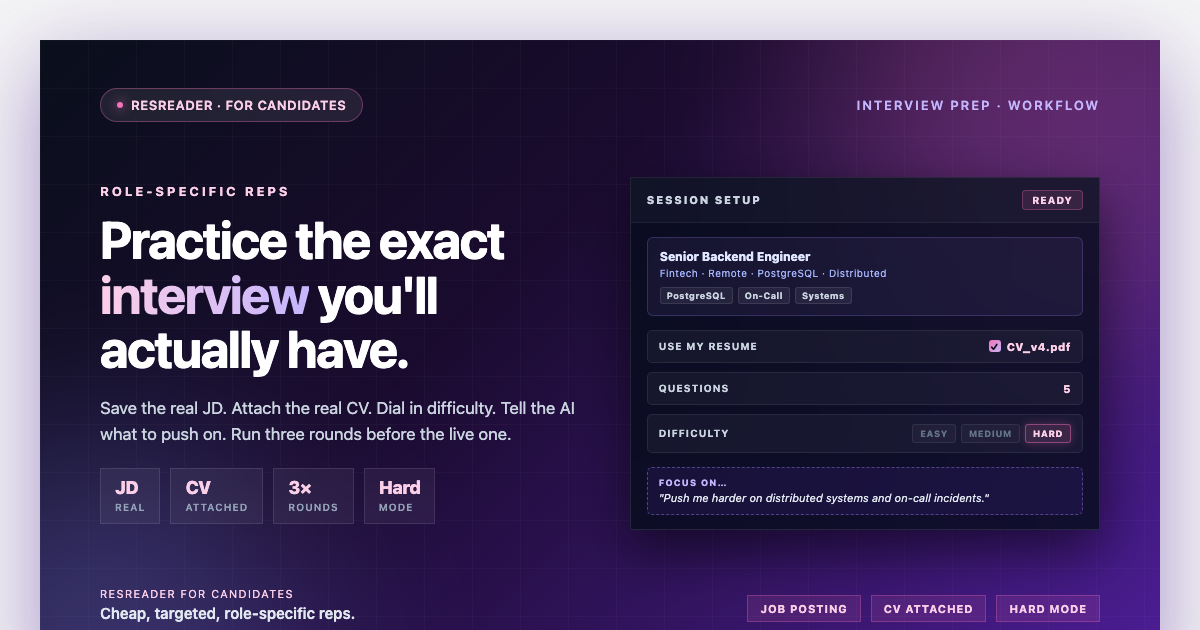
How to Practice for a Specific Job Posting (Not Just Generic Interview Questions)
Generic interview prep is why most candidates choke on role-specific questions. Here's how to use AI mock interviews to practice the exact interview you'll have.
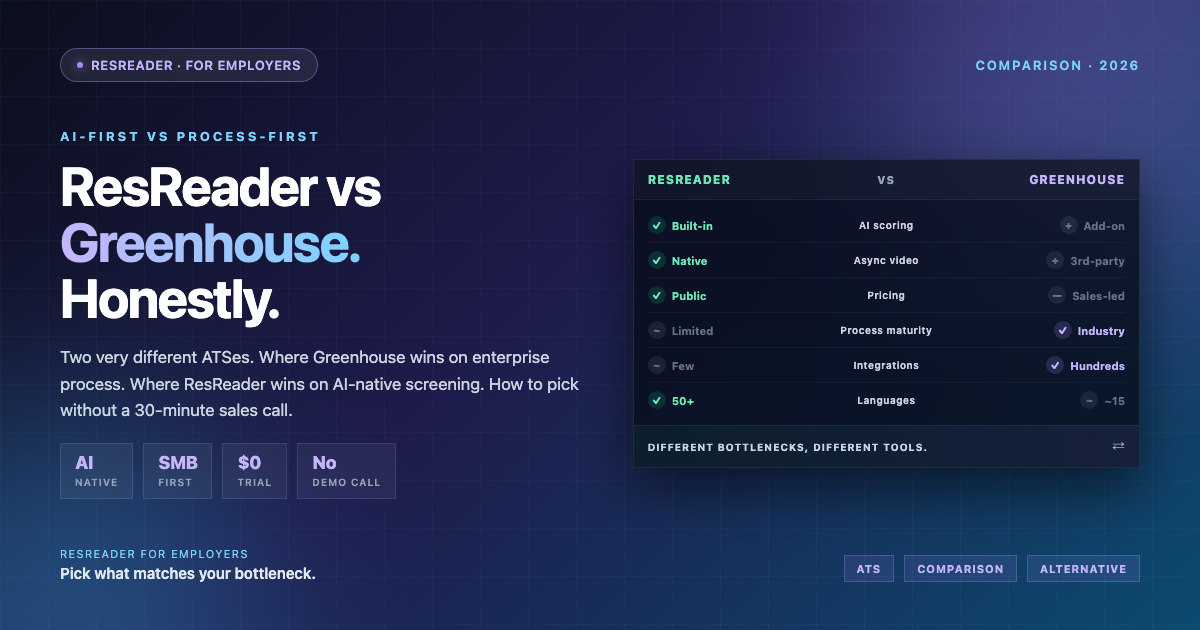
ResReader vs Greenhouse — When AI-First Beats Process-First
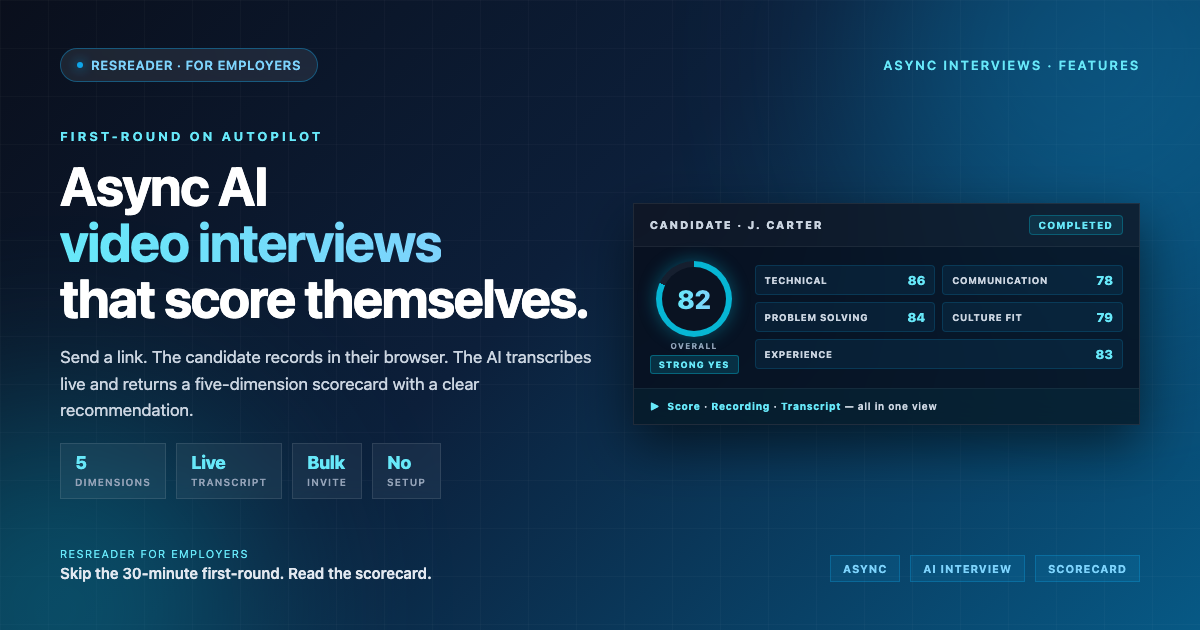
Async AI Video Interviews — What They Are and How ResReader Runs One
A practical look at async AI video interviews — how a candidate records on their own time, how the AI transcribes live, and the five-dimension scorecard a recruiter sees afterwards.
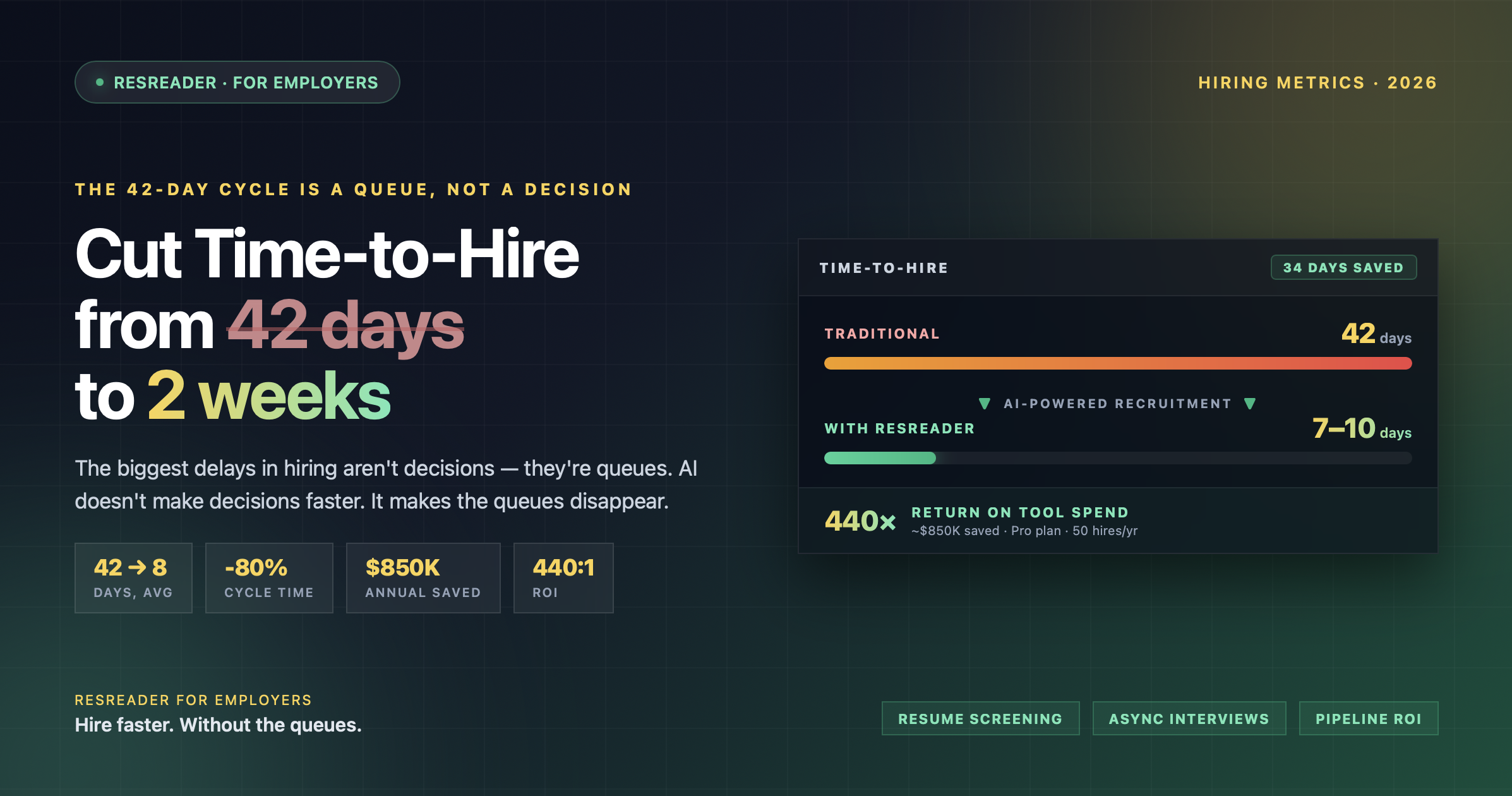
How to Cut Time-to-Hire from 42 Days to 2 Weeks with AI Recruitment Tools
The average time-to-hire is 42 days. Learn how AI-powered recruitment tools can cut your hiring cycle by 60% — from 42 days to under 2 weeks — without sacrificing candidate quality.
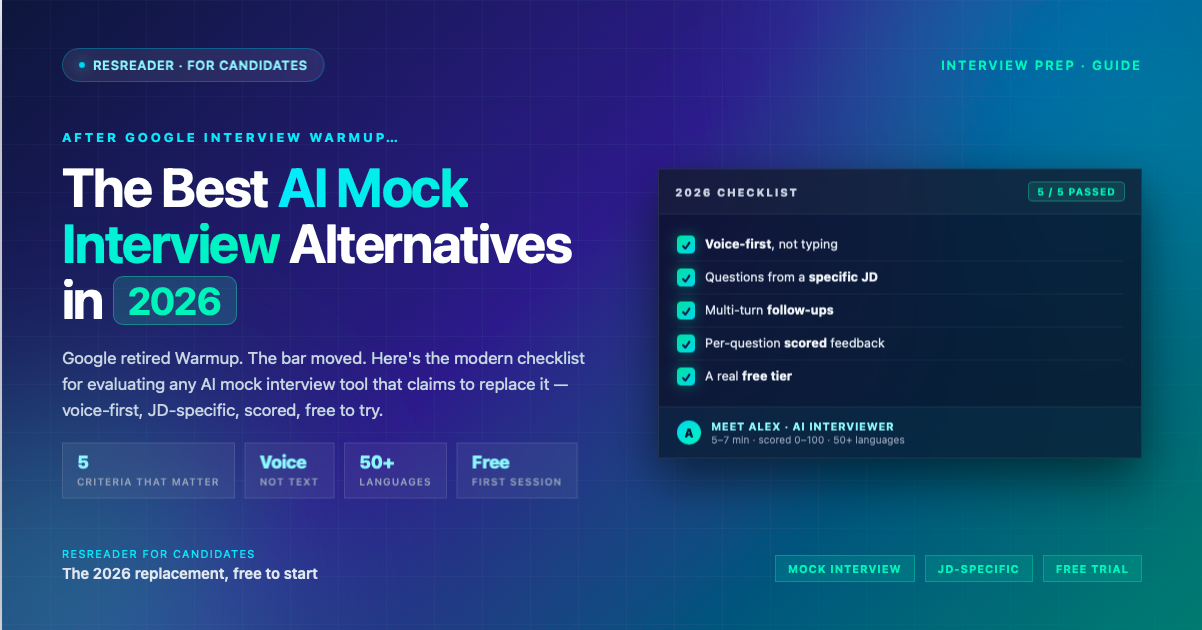
The Best Google Interview Warmup Alternatives in 2026 (AI-Powered)
Google quietly retired Interview Warmup. Here's the 2026 replacement landscape — what to look for in a modern AI mock interviewer, and how to evaluate the options.
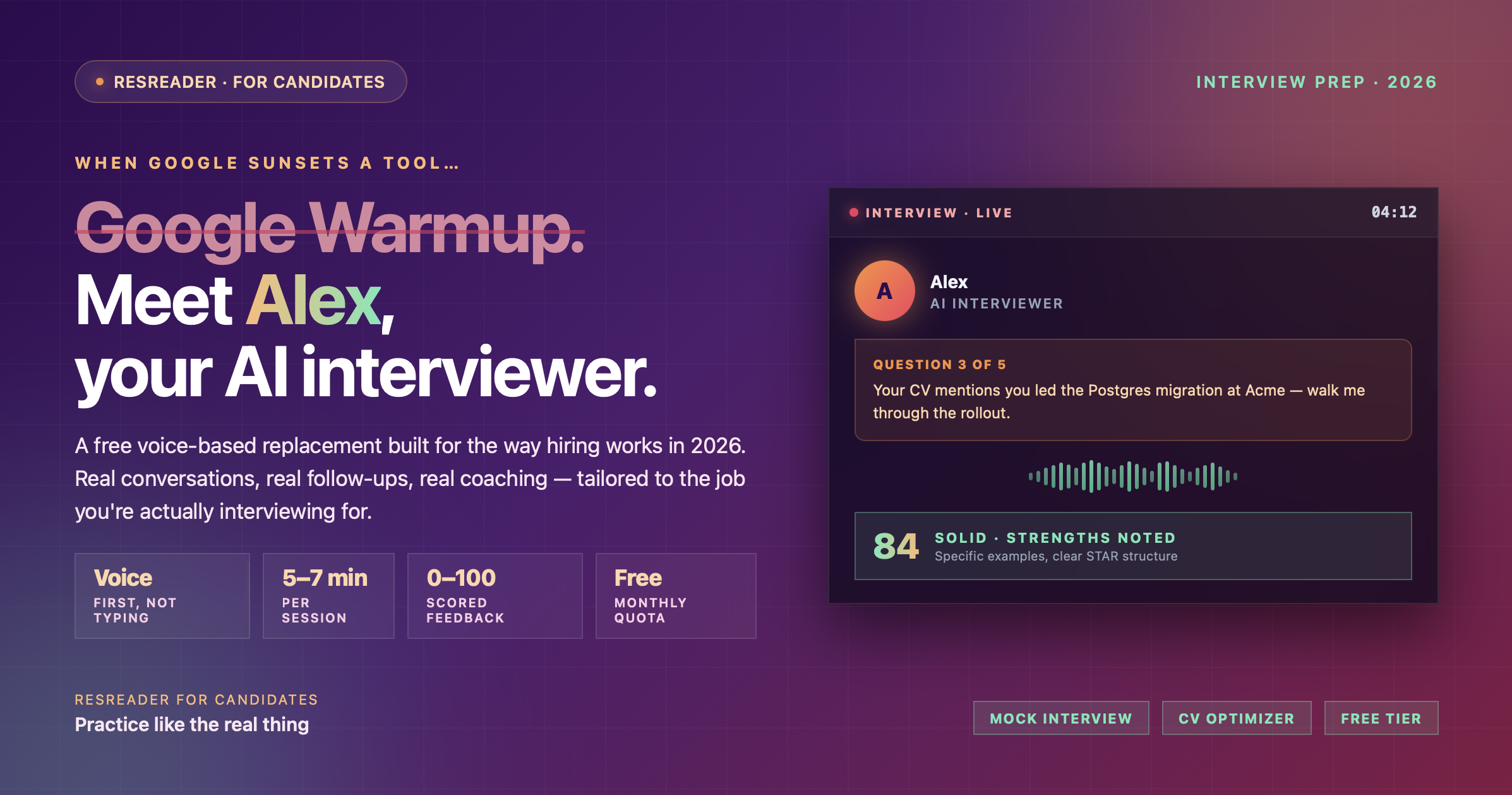
Google Interview Warmup Is Gone — Here's What Replaces It in 2026
Google's free Interview Warmup tool, launched in 2022, has been retired. If you were using it to practice for job interviews, here's a more powerful, voice-based AI alternative built for the way hiring actually works in 2026.
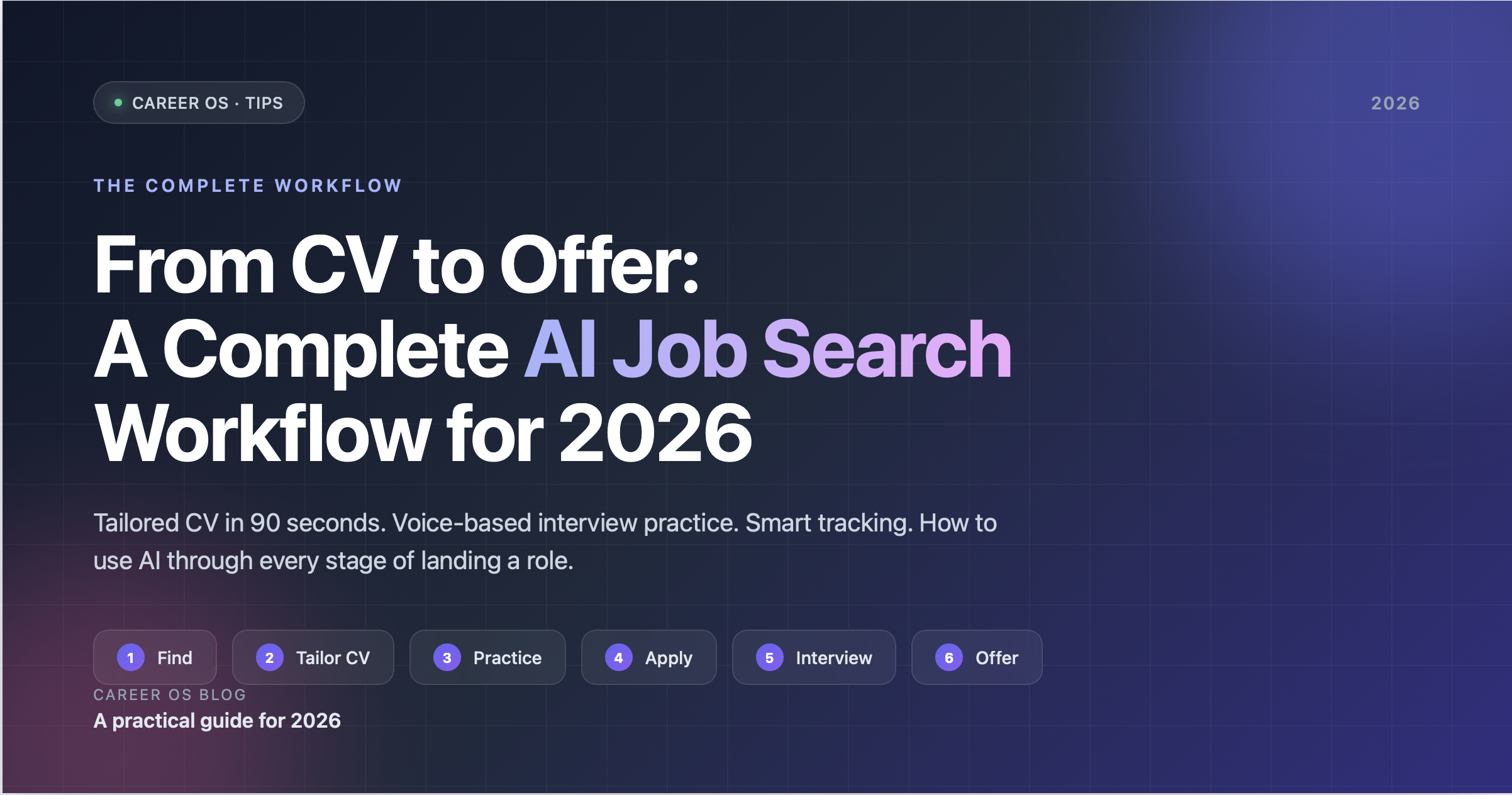
From CV to Offer: A Complete AI Job Search Workflow for 2026
A practical step-by-step workflow for using AI through every stage of the job search — tailored CV, role-specific interview practice, application tracking, and the offer call.
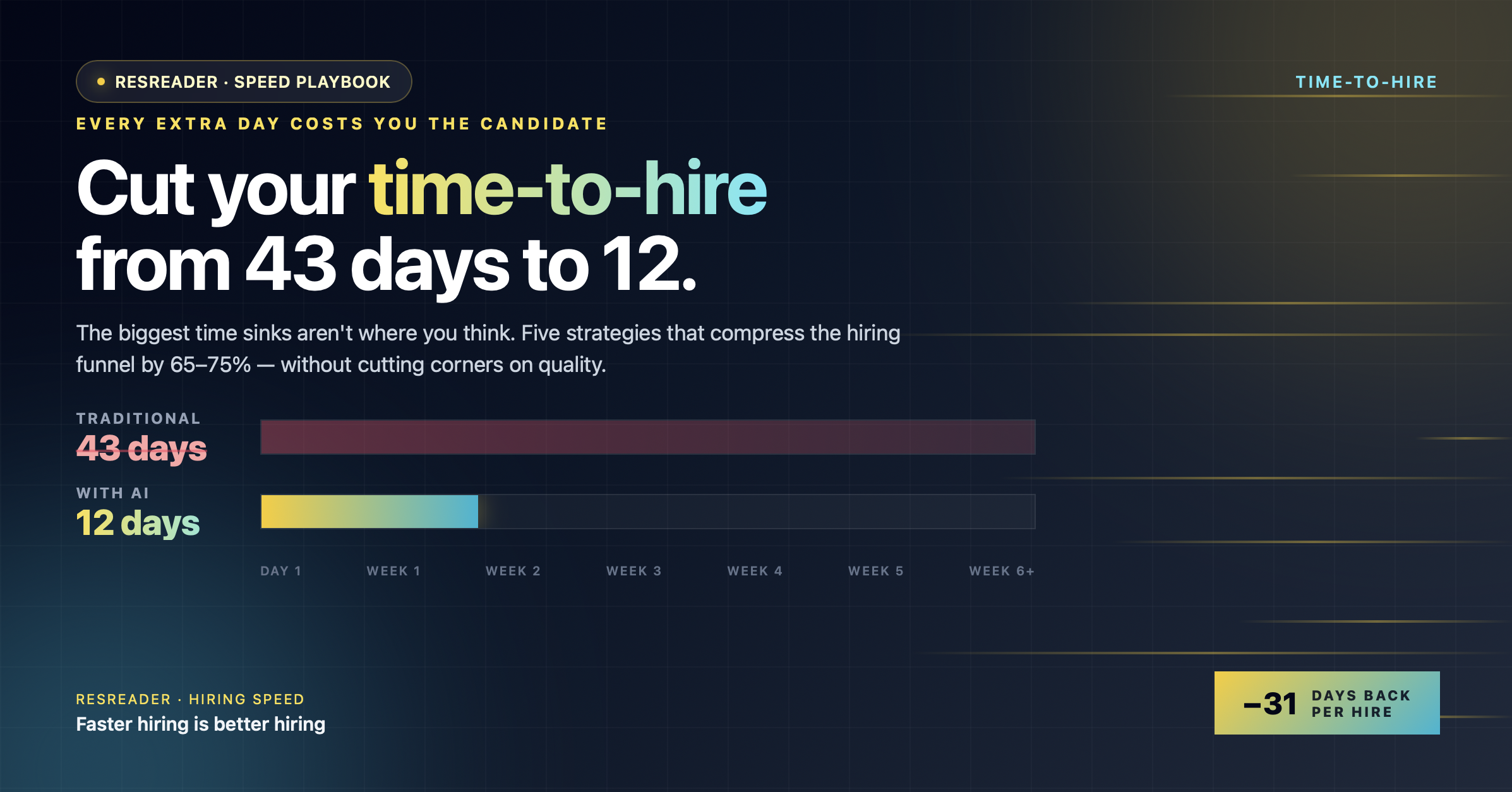
How to Cut Your Time-to-Hire in Half Without Sacrificing Quality
The average time-to-hire is 43 days. Learn proven strategies to cut it in half while improving candidate quality and experience using AI-powered recruitment.
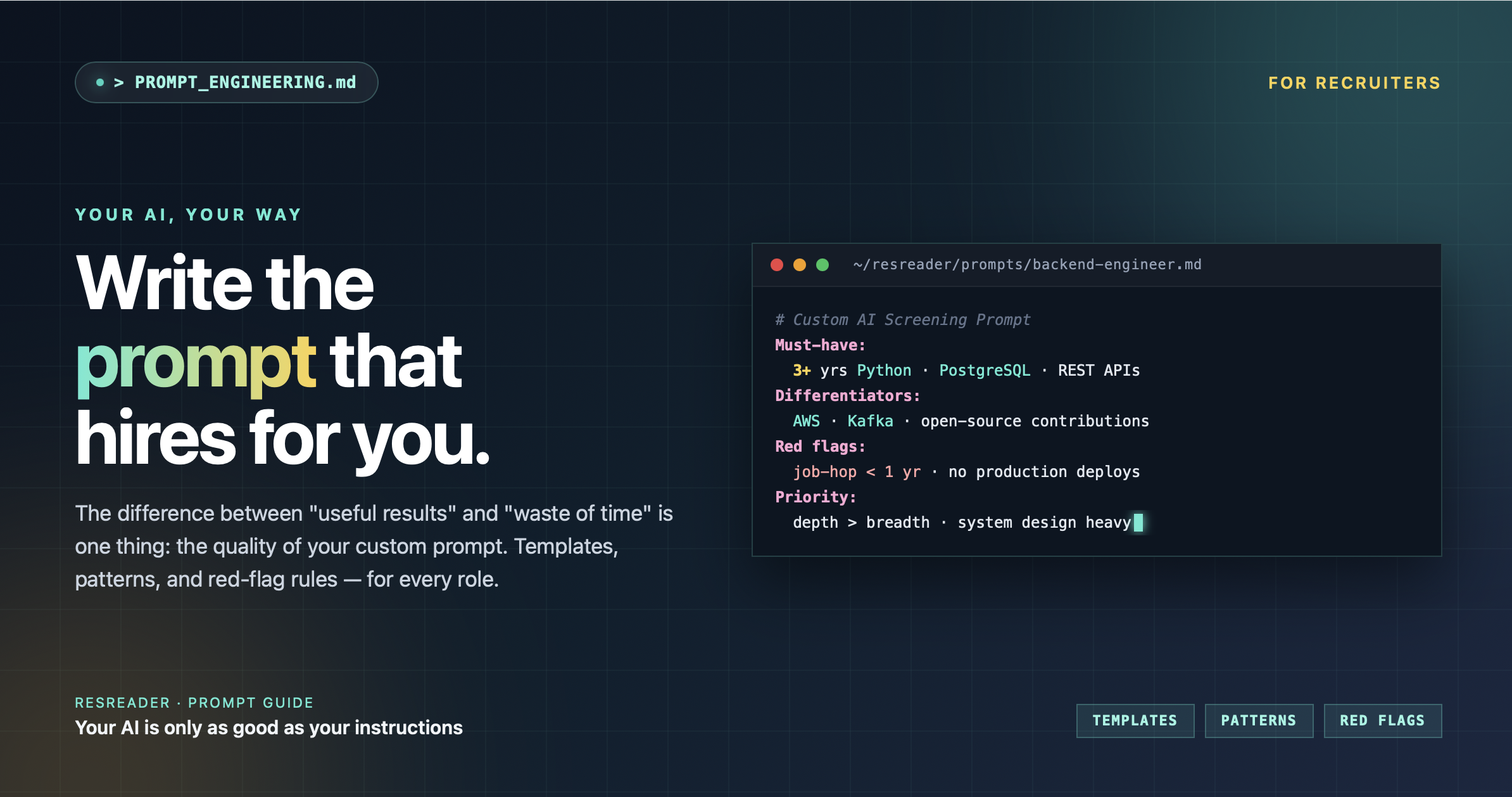
Writing Effective AI Screening Prompts: Examples for Every Role Type
Learn how to write custom AI prompts that screen candidates exactly the way you would. Includes ready-to-use templates for engineering, marketing, sales, and more.
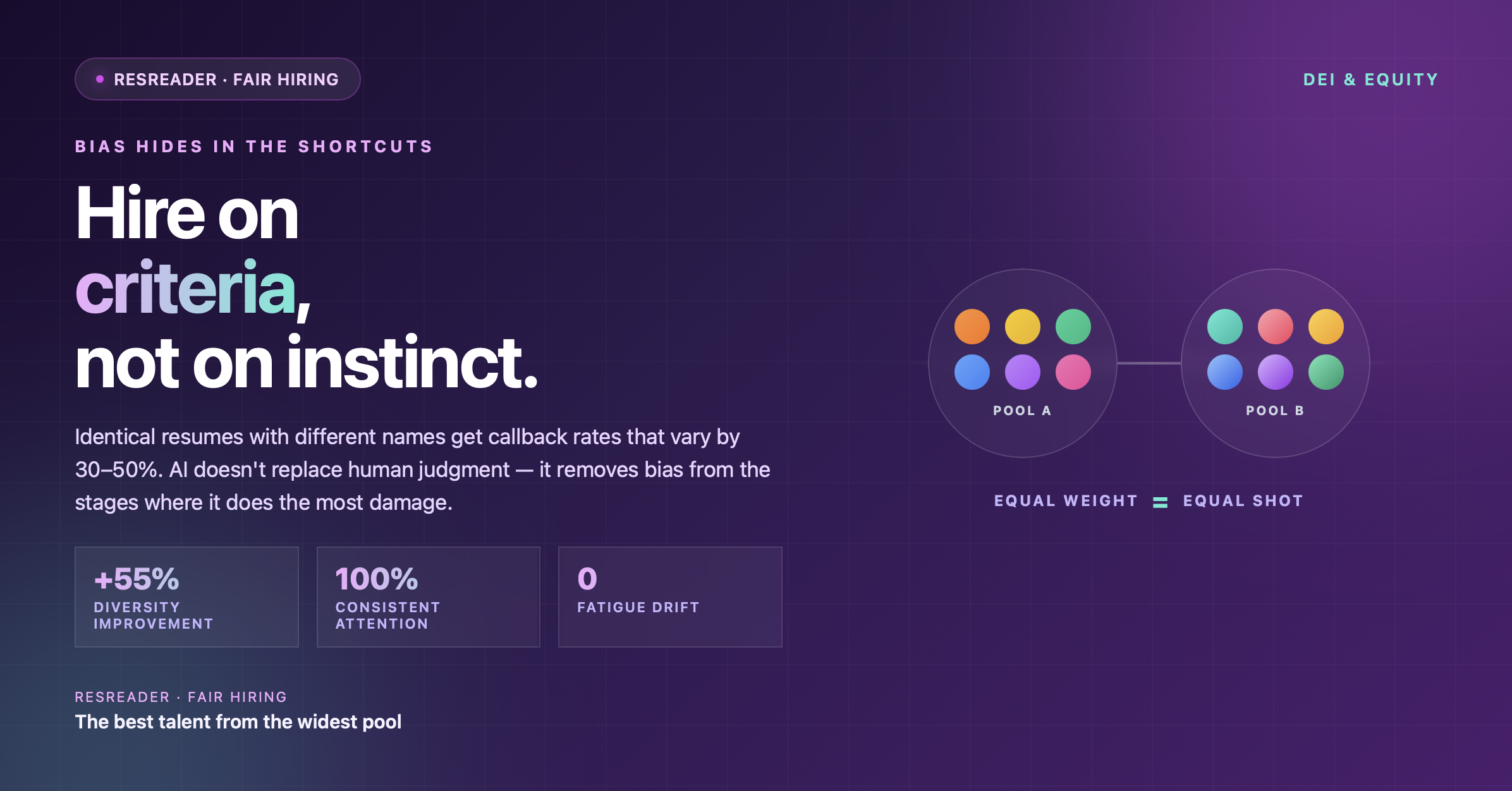
How AI Reduces Unconscious Bias in Hiring (Without Removing the Human Touch)
55% of companies using AI screening report improved diversity. Learn how AI reduces unconscious bias in resume screening and interviews while keeping humans in charge.
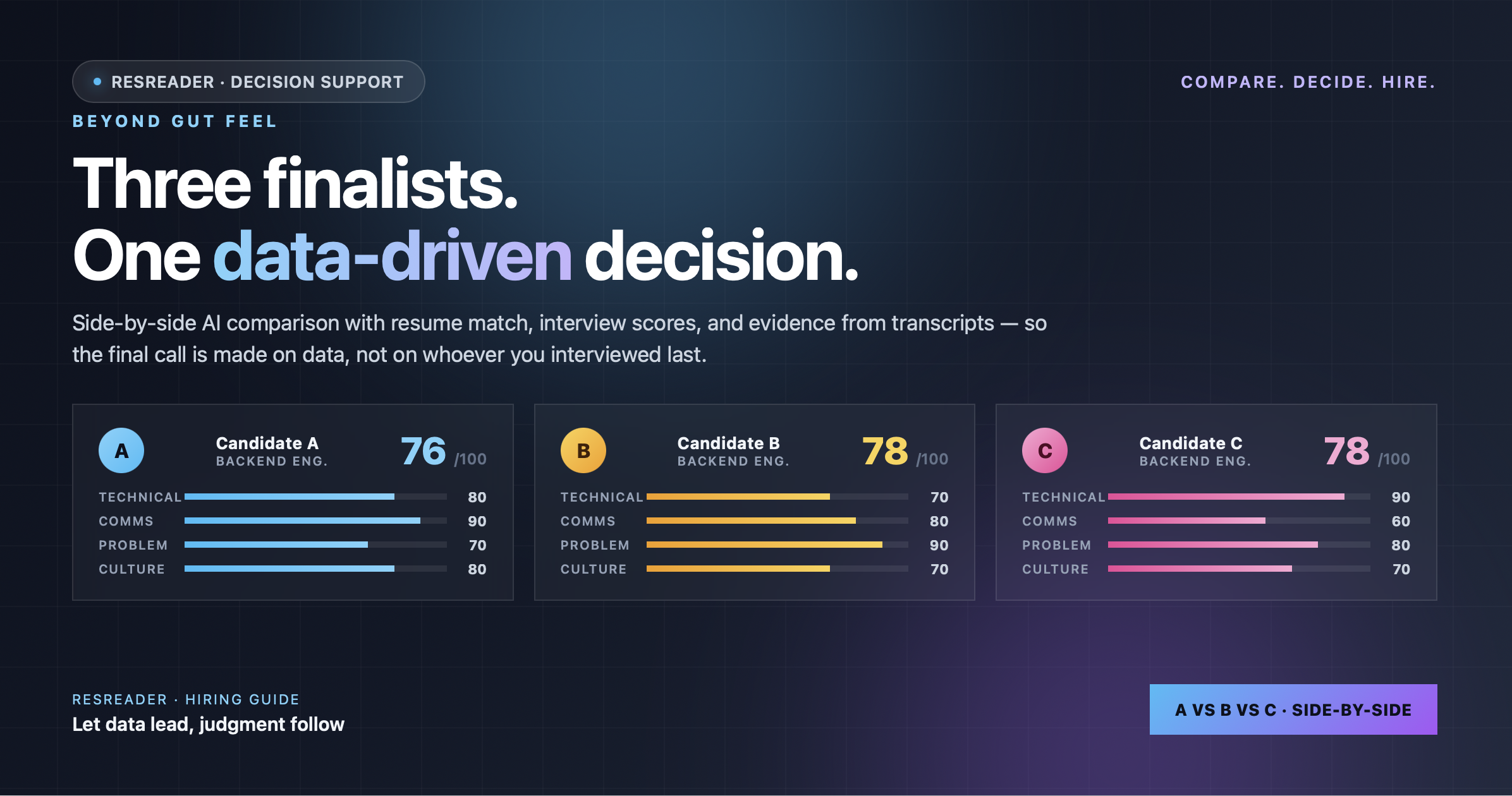
How to Compare Candidates Objectively: A Data-Driven Approach
Stop relying on gut feelings. Learn how to compare job candidates objectively using AI-powered analysis, structured scoring, and side-by-side comparison tools.
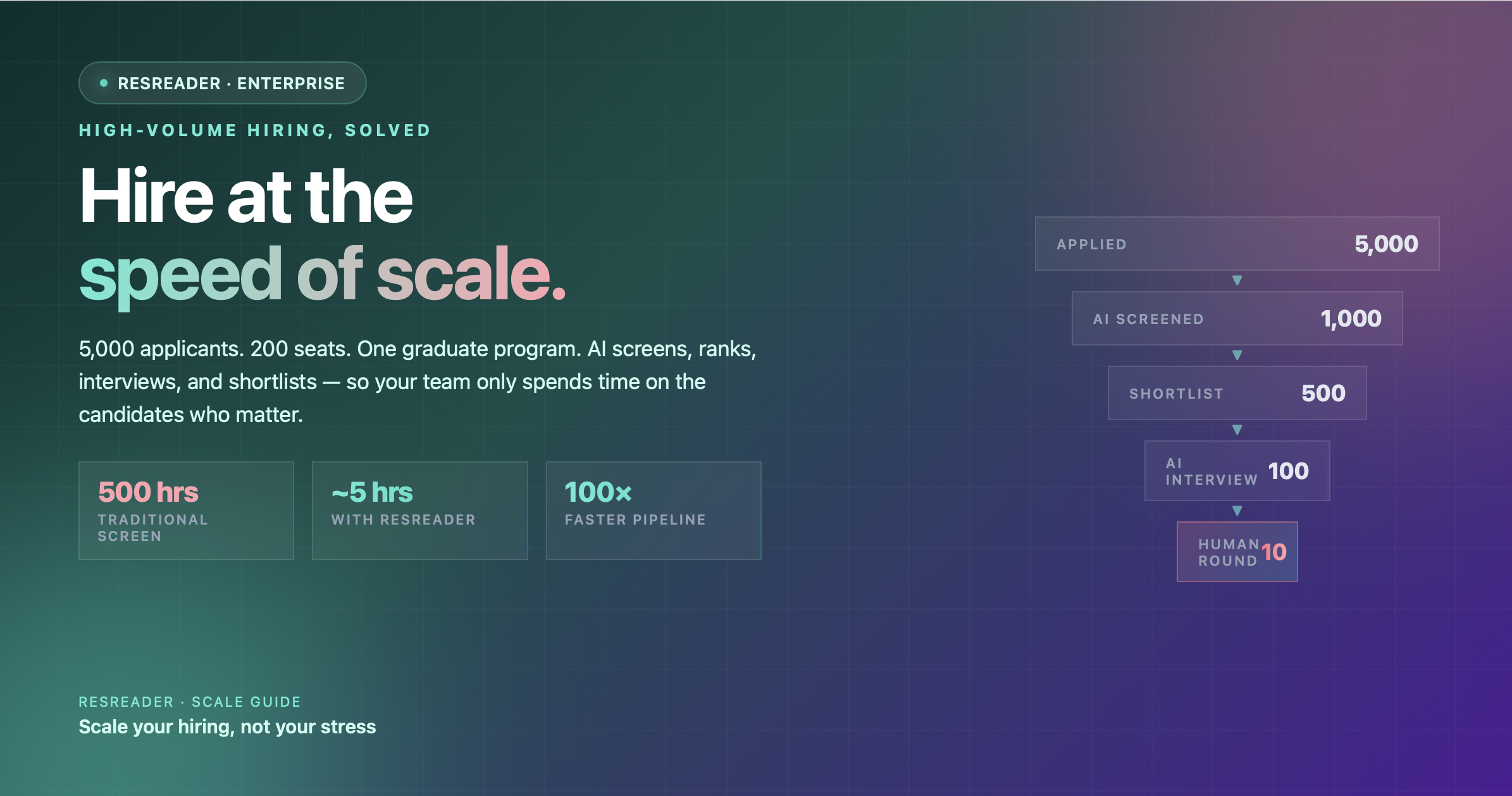
High-Volume Hiring: How to Screen 10,000 Candidates Without Losing Quality
High-volume recruitment doesn't have to mean low-quality hires. Learn strategies to screen thousands of candidates efficiently while maintaining hiring standards.
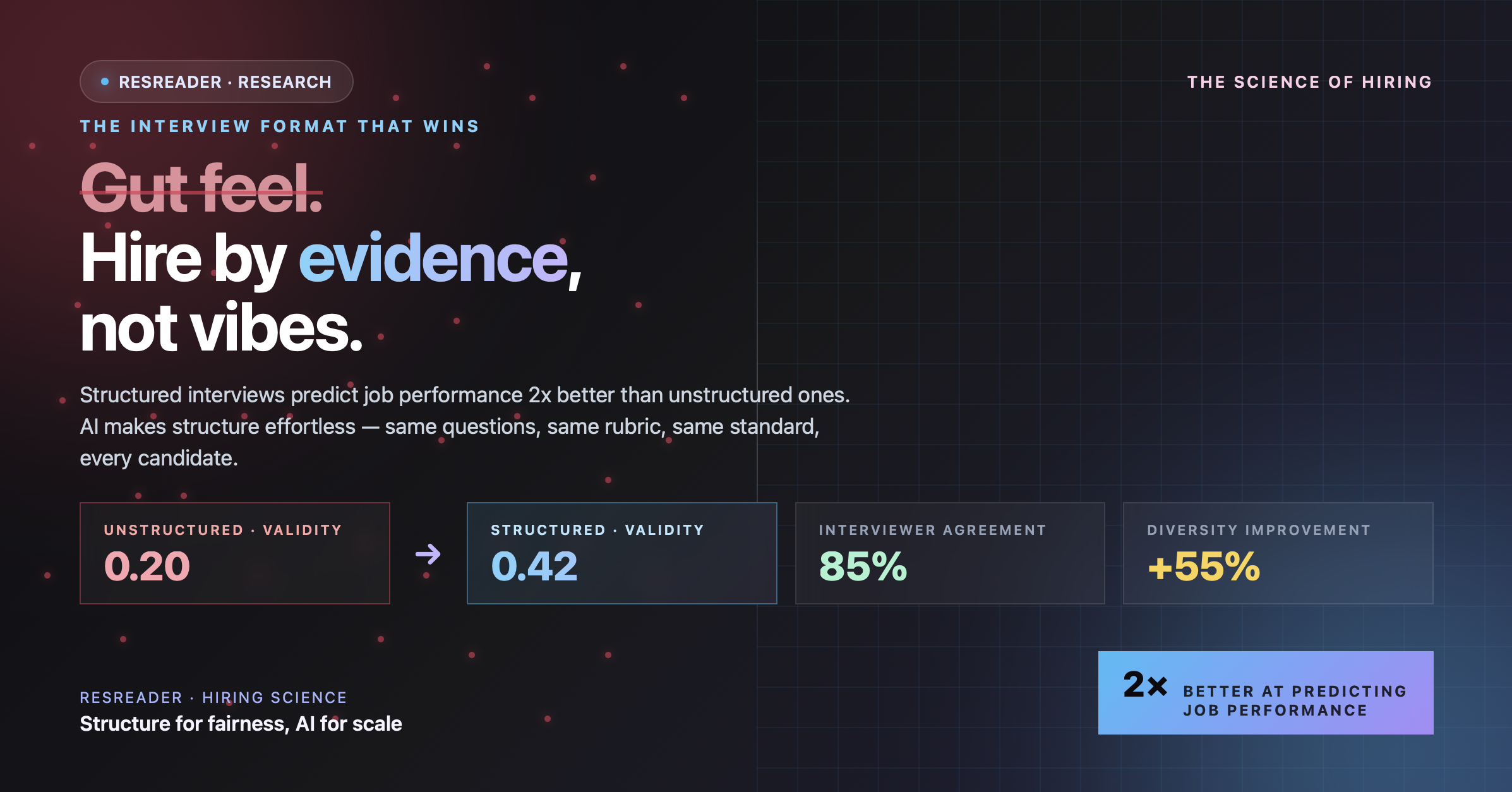
Structured vs. Unstructured Interviews: Why Structure Wins (And How AI Makes It Easy)
Research shows structured interviews predict job performance 2x better than unstructured ones. Learn why — and how AI makes structured interviewing effortless.
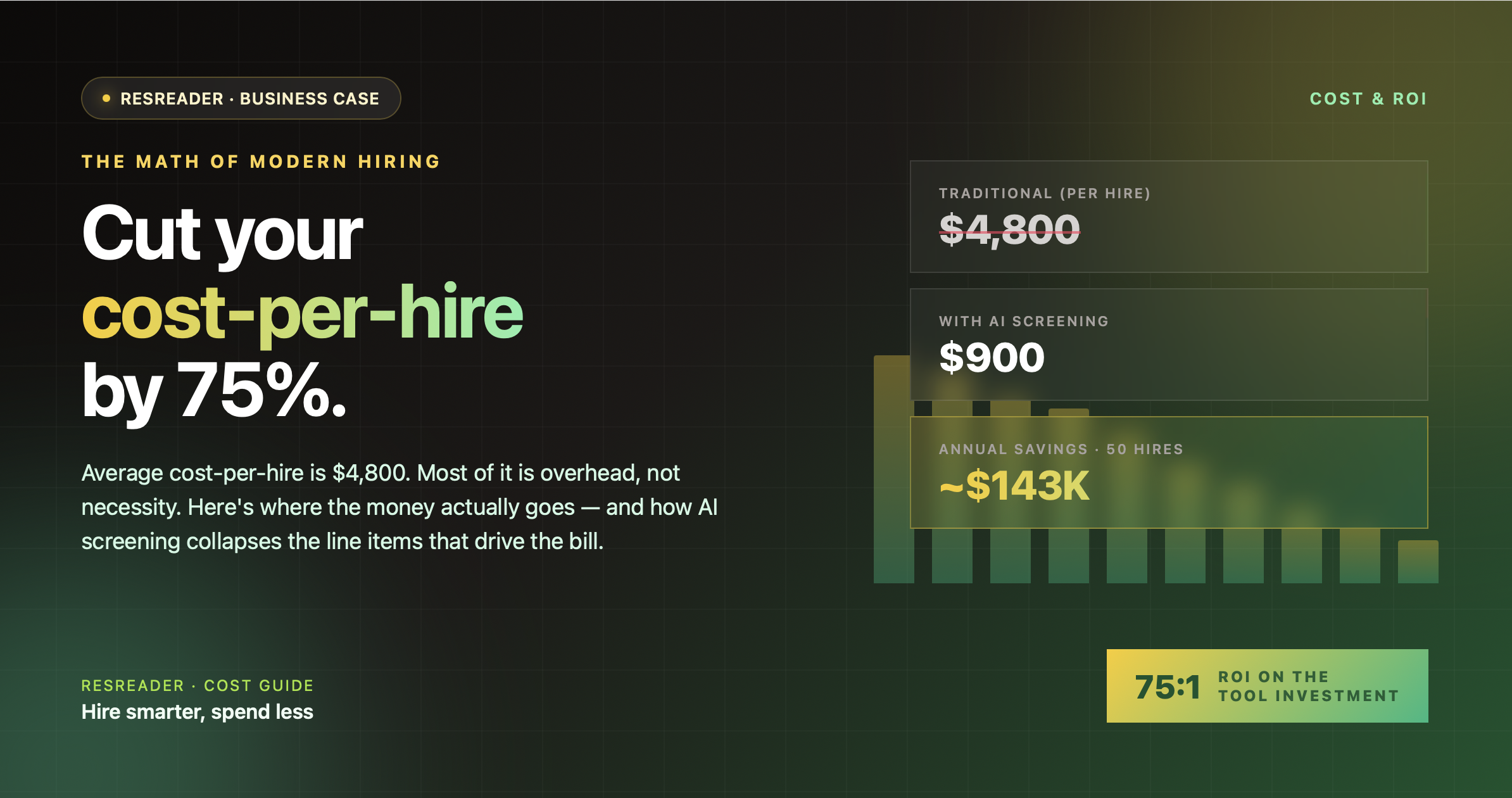
How to Reduce Your Cost-Per-Hire by 60% with AI Recruitment Tools
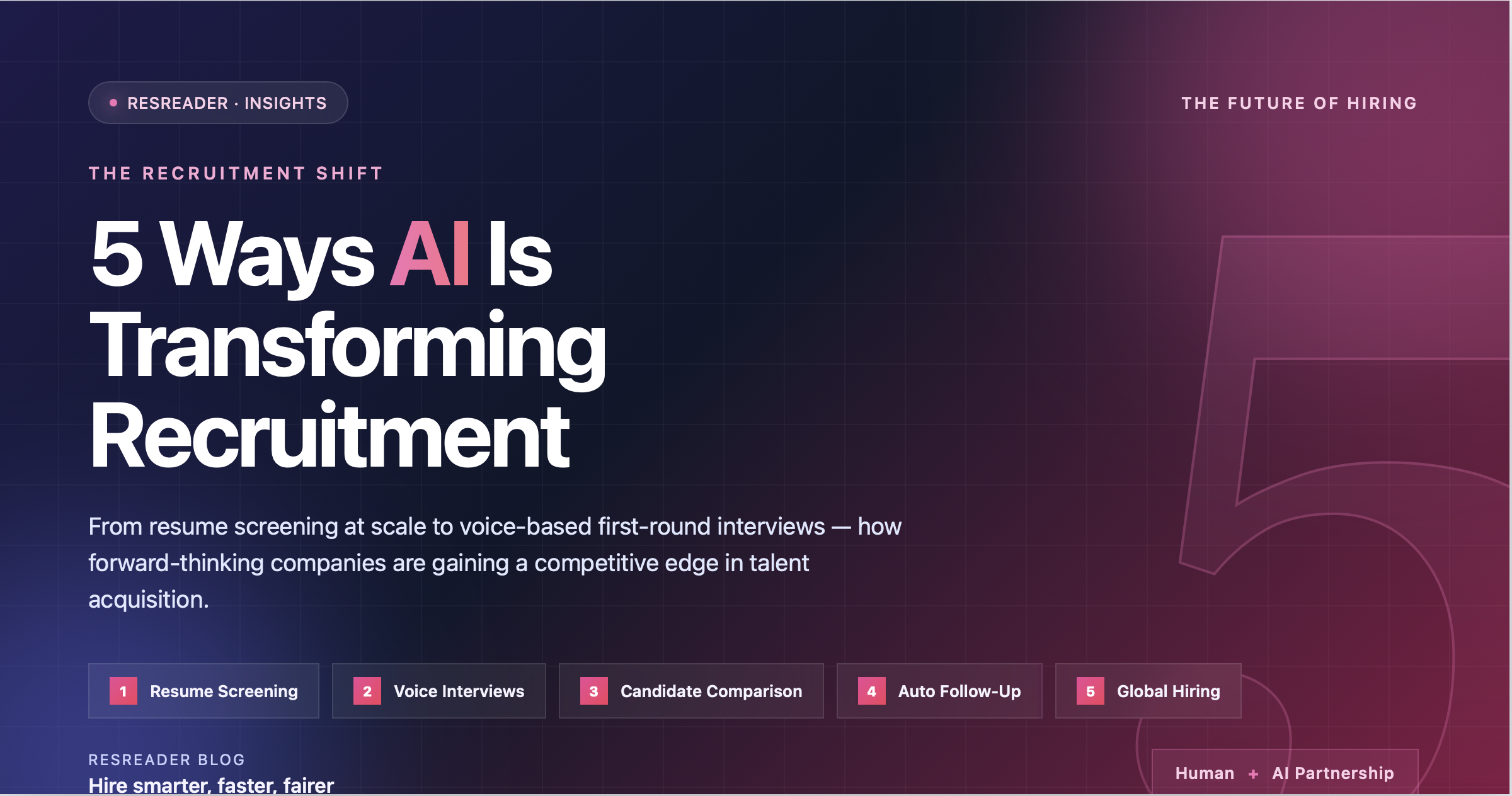
5 Ways AI Is Transforming the Hiring Process
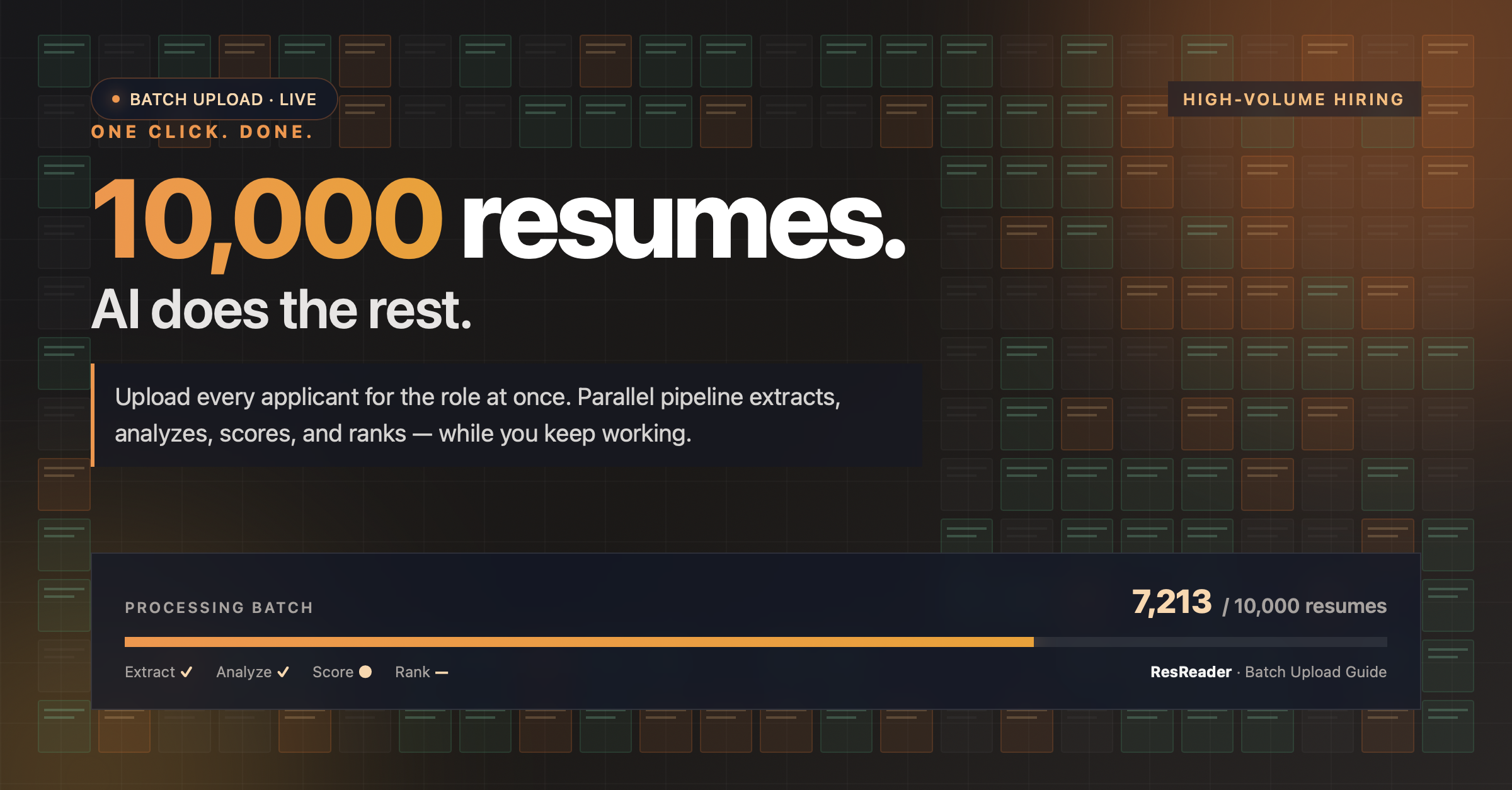
How to Upload and Screen Thousands of Resumes in Minutes
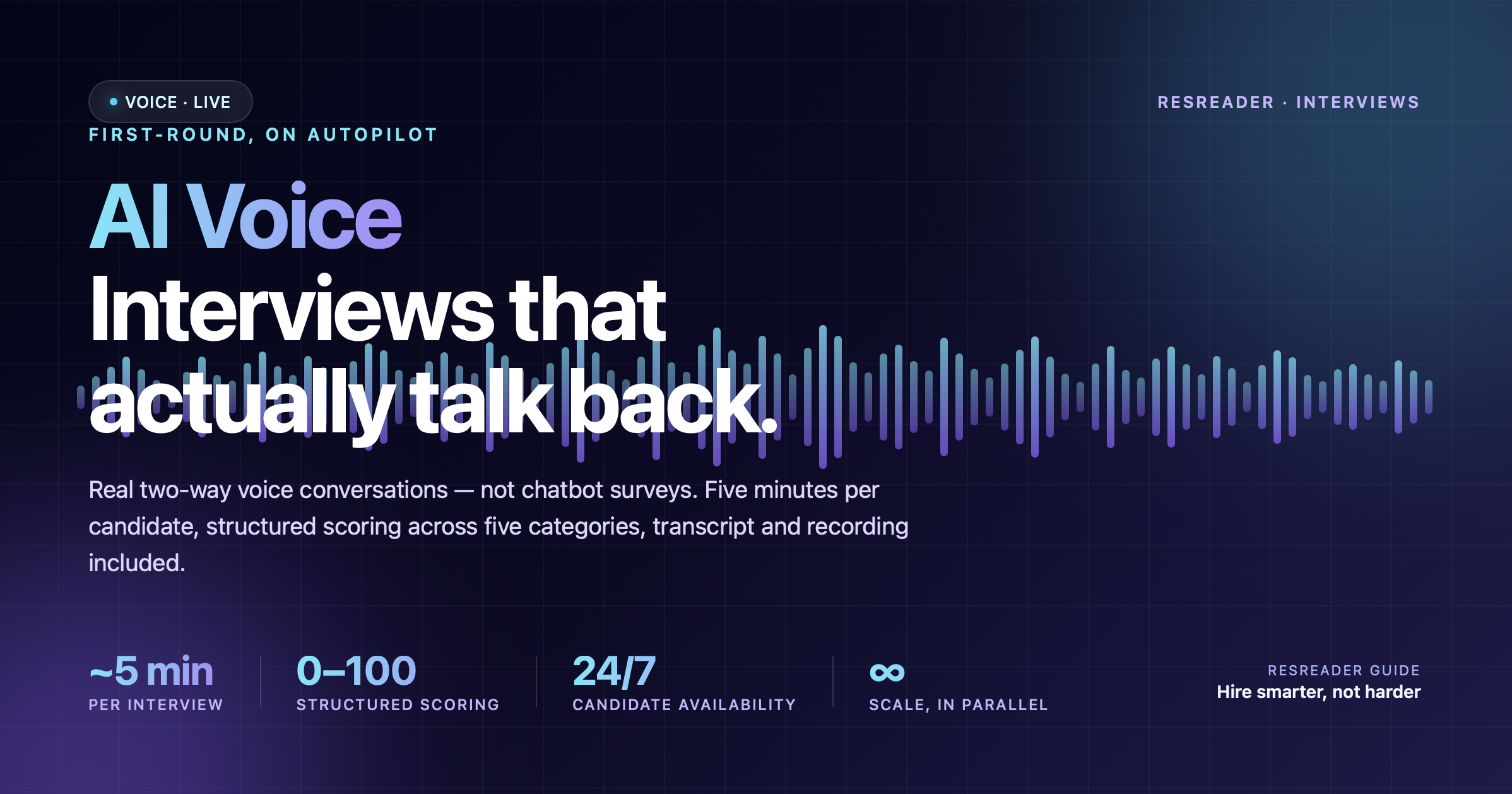
AI-Powered Interviews: Automate Your First-Round Screening
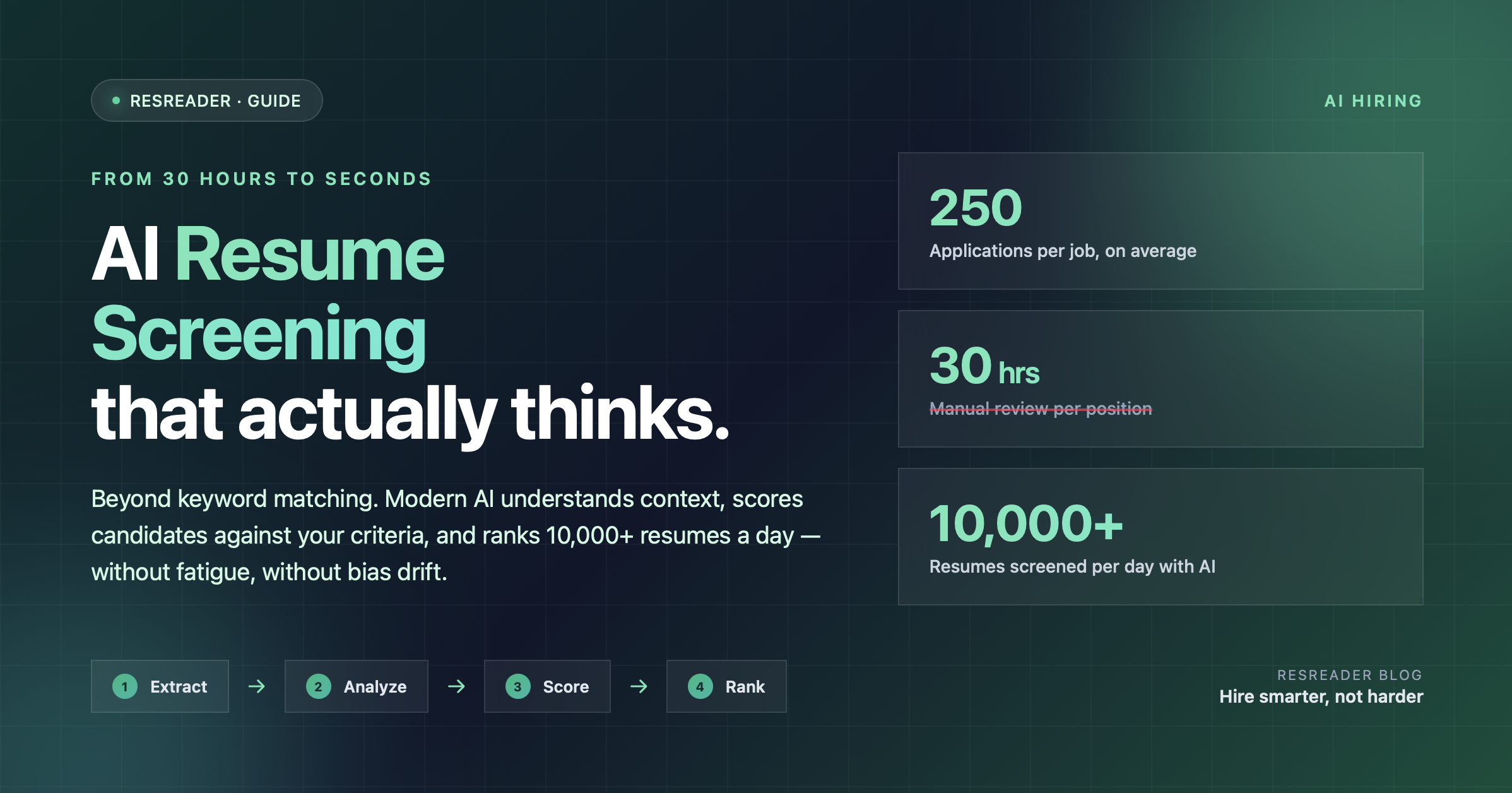
AI Resume Screening: How It Works and Why Your Team Needs It